At a glanceCiphertext-only break · complete
- The telegrams
- Four telegrams from Tokyo to Shanghai, 3 to 13 June 1916 (N05, N13, N16, N26), 239 four-digit groups: Huang Xing on the North–South settlement after Yuan Shikai’s death, and Zhang Xiaozhun on a small payment.
- Where
- Diplomatic Archives of the Ministry of Foreign Affairs of Japan, via JACAR: B03050089200, B03050089300 and B03050089400. Telegraph-office forms copied by the police.
- The cipher
- Chinese telegraph code numbers in groups of four digits. The first two groups of a form are in clear and name the code book: 6591 1378 = 辰密. N05 has no prefix.
- How it was deciphered
- The key was found by annealing, with no crib, on three telegrams; the fourth reads with it unchanged and the day code at the end of N16 matches the date on its form.
- Credit
- Brice Dudout, with Claude (mainly Opus 5.5): digits re-read on the scans, the key (published 19 October 2026), translations and context. Satoshi Tomokiyo, Cryptiana: the identification of the key as a renumbered 明密 code book; his section credits the formula to Dudout. This project checked the key with its own decoder.
- What it says
- Huang Xing declines to word a joint telegram to Li Yuanhong and the provinces and asks the Shanghai friends to take a firm line (N13), and Zhang Xiaozhun suggests a reliable division for the new president (N16).
- Still open
- Seven characters are probable readings resting on one digit or on the sense. The key is a reconstruction: no copy of the 辰密 book has been found.
01 The forms
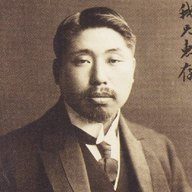
When Yuan Shikai died on 6 June 1916, Huang Xing was in Tokyo, living at Aoyama Minami-machi 3-53, and his allies were in Shanghai. The Japanese police copied the telegrams that passed between them onto the telegraph office’s own forms, and the copies survive in a Foreign Ministry series of mail and telegrams of watched persons. Each form holds a grid of digits written as kanji numerals. Brice Dudout reads the grid in columns, right to left, each column from the top, and cuts the stream into four-digit groups.
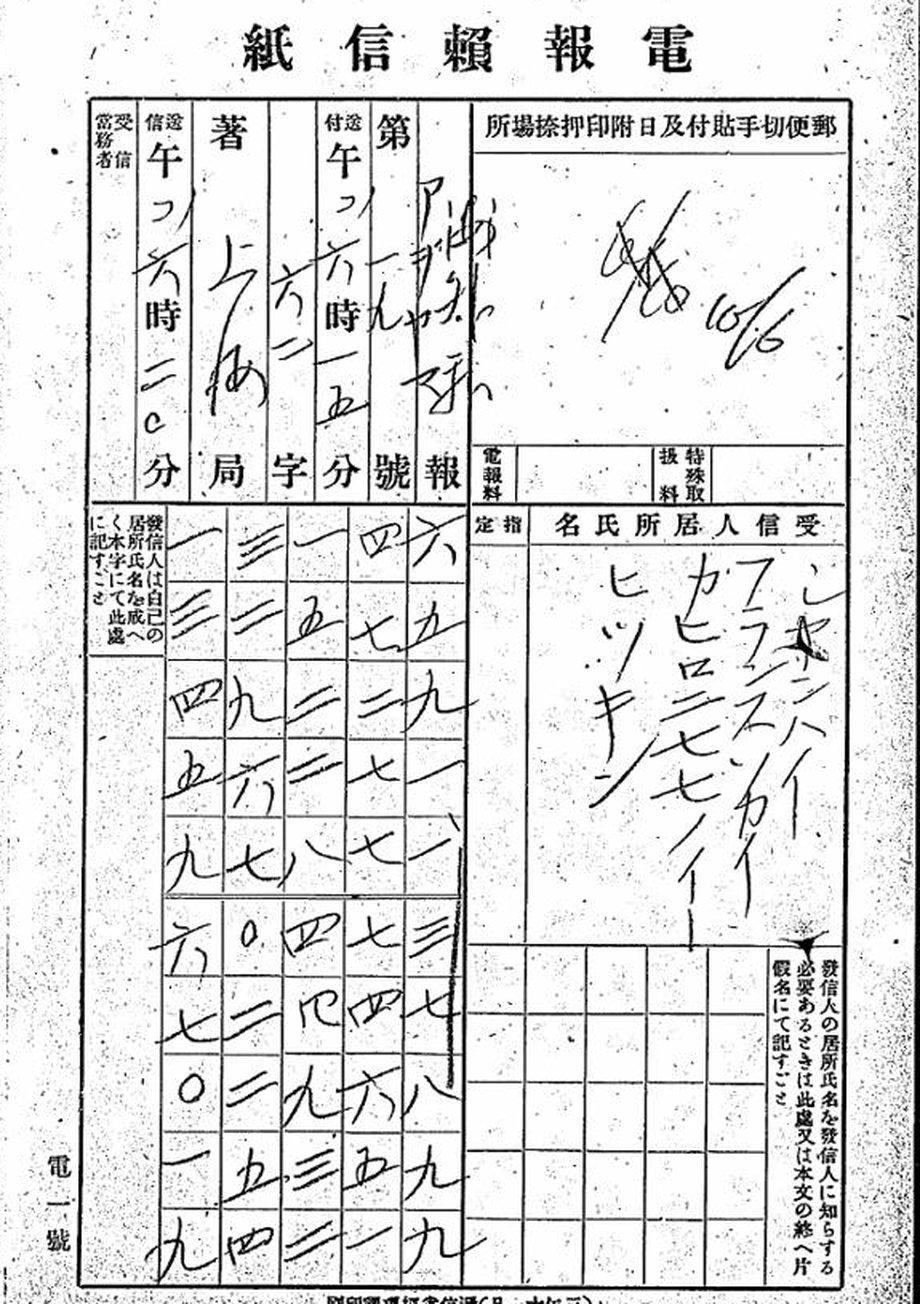
The first two groups are in clear and name the code. Hsueh Chun-tu’s edition of Huang Xing’s 1916 drafts notes a code name at the head of each telegram, one per correspondent. On that evidence 辰密 is a code book issued to particular correspondents, and it needed its own key. The same files hold telegrams in two other numeric keys with their own pages: 容密 and 共密.
| telegram | N05 (no prefix) | N13 | N16 | N26 | all |
|---|---|---|---|---|---|
| date, 1916 | 3 June | 9 June | 10 June | 13 June ? | |
| groups | 38 | 88 | 104 | 9 | 239 |
Group counts measured on the transcription. Of the 239, 232 read without doubt and 7 are probable readings (Daniel’s rule, counted on reading.md).
02 The 辰密 key
This key adds nothing to the number: it is the telegraph code itself, reordered. The code is laid out in pages of a hundred characters. In 辰密 the first two digits give the page, counted backwards over the numbers that contain no zero: 99 is page 00, 98 page 01, down to 91 = page 08, then 89 = page 09 (90 is skipped), and so on to 11 = page 80. The tens and units are permuted:
| digit | 0 | 1 | 2 | 3 | 4 | 5 | 6 | 7 | 8 | 9 |
|---|---|---|---|---|---|---|---|---|---|---|
| tens | 3 | 9 | 8 | 7 | 1 | 0 | 2 | 6 | 4 | 5 |
| units | 1 | 9 | 5 | 4 | 3 | 2 | 6 | 7 | 8 | 10 |
Example. 9950 4220 6219. In 9950, page 99 is 00, tens 5 is 0, units 0 is 1: 0001, 一. In 4220, page 42 is 52, tens 2 is 8, units 0 is 1: 5281, 興 (Huang Xing’s signature). In 6219, page 62 is 34, tens 1 is 9, and units 9 counts as 10, carrying into the tens: 3400 + 90 + 10 = 3500, 灰, the day code for the 10th.
How it was found. No 辰密 telegram had a known plaintext, and the 共密 and 容密 keys did not fit. Two features pointed to a reordered book: no 0 in the first two places, and a quarter of the text on three “pages” (99, 96, 93). Annealing a model with permuted pages, tens and units on three telegrams (N13, N16, N26: 201 groups) gave readable text, scored with a language model of telegraph-code characters. The page table it found followed the zero-free countdown, which was then imposed. Two wrong characters, 劈 for 力 and 滠 for 灰, both from groups ending in 9, gave the rule that 9 stands for 10.
As a renumbered book. Satoshi Tomokiyo, in the Cryptiana section on the mingmi (明密) format codes, reads this key, and the 共密 and 容密 keys, not as arithmetic but as one standard 明密 code book whose pages, columns and rows were rewritten by hand, as in a June 1916 edition he shows. In his picture the tens digit is a column number and units 9 stands for the tenth row, which is why xxx0 sits at the foot of the previous column. The two descriptions give the same table; the repository file key.md states the key both ways.
Dating. Dudout published the 辰密 page, key and four telegrams on 19 October 2026 (GitHub commit of the Wenmi repository, 15:15 UTC). Tomokiyo’s section is undated, the page was last modified on 24 October 2026, and Wenmi cites it as of 23 October. The section credits the formulas to Dudout (“He discovered the pages are numbered backwards, skipping any number containing a zero”) and adds the renumbered-book reading.
03 The checks
His checks. N05 was left out of the search and has no prefix, yet it decodes straight through. N16 ends with 灰, the 10th, the date on its header. The names that come out belong to people holding the right offices in June 1916 (Zhao Hengti, Tang Hualong). Every digit was re-read blind on the scans by Brice Dudout, without seeing the decipherment.
The check made here (20 October 2026). His verify.py reproduces the published raw texts from his digits and scores the 辰密 text at 3.77 against 200 random keys of the same form (best −1.59) and 200 shufflings of the digits (best −1.18). A decoder written here from the key statement alone, using the Unihan telegraph-code table already in this repository, gives the same character as his published text for all 239 groups. The 辰密 search itself was not rerun here. This confirms that the key as stated turns his digits into his text; it does not re-read the scans. Only the first dozen digits of the N16 form shown above were compared by eye, and they match.
04 What they say
Hsueh Chun-tu’s edition of Huang Xing’s 1916 drafts has nothing between the pieces of 8 and 20 June, and these telegrams are mostly dated in between. Translations below are Dudout’s, shortened.
On 3 June (N05, no prefix) Huang Xing tells Liewu that if the Shandong side wants him to take charge of unifying matters he may accept directly, and that Puquan (Zhang Ji) should go with him. On 9 June (N13) he writes to three friends in Shanghai that the telegram to Li Yuanhong, Cen Chunxuan and the provinces is very hard to word: if the positions are not unanimous the party risks looking divided, and if it writes as their telegram says people will see it as opportunism. “Japan’s attitude is very much wait-and-see” (日態度頗觀望); the friends in Shanghai should take a firm stand.
On 10 June Zhang Xiaozhun asks the same group to give the new president troops he can rely on (N16, shown above): Zhao Hengti, “always trusted by Li”, then training troops under Governor Tang, should form an elite division at his disposal, and arms “should be possible”. The last telegram (N26, 13 June?) is a single line: three hundred yuan to Baili, signed 準.
05 What is open
- Seven characters are probable readings, four resting on a single digit and the others on the sense: 一不 in N13 is probably a slip for 不一, and 盻 stands for 盼. Nothing is left unresolved.
- The key is a reconstruction: no historical copy of the 辰密 book has been found. The 1916 edition of the telegraph code is not identified.
- The texts have not been found in the 黃興集 or in Li Yuanhong’s correspondence, which are still to be searched. The translations are proposals.
Full texts
The transcription and the decryption of every document on this page, so that the reading can be used and checked. Short files are shown here; all are in the repository.
辰密 (Chenmi), 4 telegrams, 3 June - 13 June 1916
Four telegrams from Tokyo to the Hunanese group's address in Shanghai (ヒツキン, 277 Avenue Joffre): Shandong and Bo Wenwei; the joint telegram to Li Yuanhong, Cen Chunxuan and the provinces; an elite division under Zhao Hengti for Li Yuanhong; 300 yuan for Jiang Fangzhen.
Transcription
# 辰密 (Chenmi), June-July 1916: cipher groups as re-read by Brice Dudout on the JACAR police copies.
# The forms carry the digits in kanji numerals in a grid, read in columns right to left, top to bottom, sheet after sheet,
# cut into groups of four. One telegram per line: label, then its groups. The clear prefix 6591 1378 (= 辰密) is left out.
# "?" = illegible digit. Sheets and dates: decryption.txt.
N05 2777 6162 6736 9608 2254 8435 7101 7392 1909 8735 6788 9608 5620 4667 9950 9997 9847 9378 5499 7659 3231 3294 6355 6564 9794 9527 6733 2202 5620 5487 9519 7576 9453 8735 9881 5430 3359 4220
N13 8449 3255 1522 9952 9608 2254 4278 1345 8438 9383 9337 5473 2114 1863 2120 3840 4920 4123 9900 8168 9950 9958 7998 7221 6738 2912 9907 8634 4127 8735 9830 2114 9970 9970 9926 7950 3348 5903 9388 8373 3294 9388 3104 8988 2740 9320 7885 5692 8442 3659 7475 5134 7684 5511 5903 5475 7339 7876 8294 1863 3303 7218 6307 9320 9926 8592 3454 5292 8169 5321 9900 8168 2740 9464 2158 8461 1845 7313 5450 2655 9697 7339 3101 5915 9987 2114 5292 4220
N16 9947 2777 4651 1522 8449 3232 9670 2254 1345 9670 1906 6413 9730 9950 9991 8317 9378 1907 9672 9519 7418 9851 7998 9958 7316 8512 3527 2915 8708 9425 4729 5903 1345 9670 7736 9757 9700 9914 9385 8970 6425 5356 9957 4626 9672 9378 9313 4239 6283 6736 4924 9213 2495 3339 6567 9749 9676 2718 4626 4707 9672 9950 8317 9859 9730 1345 9670 1647 2639 6736 9115 9950 8470 4989 9696 9519 8996 9907 5620 9378 2726 9590 7256 9683 2114 3294 9388 3104 8988 2740 9320 7885 9858 7475 5134 5511 2114 9950 4403 7218 2684 3527 6413 6219
N26 9986 9859 9952 5455 9607 9933 5455 2481 6413
Decryption
# 辰密 (Chenmi): decryption, group by group
# cipher group -> CTC number under key C92 (key.md) -> character; status as on the Wenmi site:
# ok; douteux = doubtful (one-digit uncertainty on the copy, or an anomalous code read as the sense requires); illisible = illegible digit

## N05 | 3 June 1916 | Tokyo → Shanghai | JACAR B03050089200, PDF pp. 25R, 25L, 26R, 26L | no prefix
   1  2777  6567  轉  ok
   2  6162  3525  烈  ok
   3  6736  2976  武  ok
   4  9608  0338  兄  ok
   5  2254  7003  鑒  ok
   6  8435  1472  山  ok
   7  7101  2639  東  ok
   8  7392  2455  方  ok
   9  1909  7240  面  ok
  10  8735  1172  如  ok
  11  6788  2948  欲  ok
  12  9608  0338  兄  ok
  13  5620  3981  當  ok
  14  4667  4827  統  ok
  15  9950  0001  一  ok
  16  9997  0057  事  ok
  17  9847  0117  任  ok
  18  9378  0668  可  ok
  19  5499  4160  直  ok
  20  7659  2110  承  ok
  21  3231  6179  諾  ok
  22  3294  6153  請  ok
  23  6355  3302  溥  ok
  24  6564  3123  泉  ok
  25  9794  0253  偕  ok
  26  9527  0487  劃  douteux
  27  6733  2974  此  ok
  28  2202  7035  間  ok
  29  5620  3981  當  ok
  30  5487  4147  盡  ok
  31  9519  0500  力  ok
  32  7576  2266  援  ok
  33  9453  0504  助  ok
  34  8735  1172  如  ok
  35  9881  0149  何  ok
  36  5430  4171  盻  douteux
  37  3359  6010  覆  ok
  38  4220  5281  興  ok

## N13 | 9 June 1916 | Tokyo → Shanghai | JACAR B03050089300, PDF pp. 3L, 4R, 4L, 5R, 5L, 6R, 6L, 7R
   1  8449  1420  小  ok
   2  3255  6102  詠  ok
   3  1522  7685  鳳  ok
   4  9952  0005  三  ok
   5  9608  0338  兄  ok
   6  2254  7003  鑒  ok
   7  4278  5268  致  ok
   8  1345  7812  黎  ok
   9  8438  1478  岑  ok
  10  9383  0644  及  ok
  11  9337  0677  各  ok
  12  5473  4164  省  ok
  13  2114  7193  電  ok
  14  1863  7324  頗  ok
  15  2120  7181  難  ok
  16  3840  5511  著  ok
  17  4920  4581  筆  ok
  18  4123  5384  苟  ok
  19  9900  0031  主  ok
  20  8168  1728  張  ok
  21  9950  0001  一  douteux
  22  9958  0008  不  douteux
  23  7998  1858  恐  ok
  24  7221  2589  有  ok
  25  6738  2978  歧  ok
  26  2912  6395  趨  ok
  27  9907  0037  之  ok
  28  8634  1273  嫌  ok
  29  4127  5387  若  ok
  30  8735  1172  如  ok
  31  9830  0171  來  ok
  32  2114  7193  電  ok
  33  9970  0061  云  ok
  34  9970  0061  云  ok
  35  9926  0086  人  ok
  36  7950  1801  必  ok
  37  3348  6018  視  ok
  38  5903  3634  爲  ok
  39  9388  0648  取  ok
  40  8373  1564  巧  ok
  41  3294  6153  請  ok
  42  9388  0648  取  ok
  43  3104  6233  護  ok
  44  8988  0948  國  ok
  45  2740  6511  軍  ok
  46  9320  0681  同  ok
  47  7885  1942  意  ok
  48  5692  3955  畎  douteux
  49  8442  1415  尊  ok
  50  3659  5710  處  ok
  51  7475  2362  擬  ok
  52  5134  4473  稿  ok
  53  7684  2143  拍  ok
  54  5511  4099  發  ok
  55  5903  3634  爲  ok
  56  5475  4162  盼  ok
  57  7339  2480  日  ok
  58  7876  1966  態  ok
  59  8294  1653  度  ok
  60  1863  7324  頗  ok
  61  3303  6034  觀  ok
  62  7218  2598  望  ok
  63  6307  3337  滬  ok
  64  9320  0681  同  ok
  65  9926  0086  人  ok
  66  8592  1355  宜  ok
  67  3454  5903  表  ok
  68  5292  4355  示  ok
  69  8169  1730  強  ok
  70  5321  4289  硬  ok
  71  9900  0031  主  ok
  72  8168  1728  張  ok
  73  2740  6511  軍  ok
  74  9464  0523  務  ok
  75  2158  7108  院  ok
  76  8461  1429  尤  ok
  77  1845  7312  須  ok
  78  7313  2494  明  ok
  79  5450  4101  白  ok
  80  2655  6602  近  ok
  81  9697  0357  兩  ok
  82  7339  2480  日  ok
  83  3101  6239  變  ok
  84  5915  3692  狀  ok
  85  9987  0047  乞  ok
  86  2114  7193  電  ok
  87  5292  4355  示  ok
  88  4220  5281  興  ok

## N16 | 10 June 1916 | Tokyo → Shanghai | JACAR B03050089300, PDF pp. 11L, 12R, 12L, 13R, 13L, 14R, 14L, 15R, 15L
   1  9947  0017  並  ok
   2  2777  6567  轉  ok
   3  4651  4809  組  ok
   4  1522  7685  鳳  ok
   5  8449  1420  小  ok
   6  3232  6175  諸  ok
   7  9670  0361  公  ok
   8  2254  7003  鑒  ok
   9  1345  7812  黎  ok
  10  9670  0361  公  ok
  11  1906  7236  非  ok
  12  6413  3294  準  ok
  13  9730  0271  備  ok
  14  9950  0001  一  ok
  15  9991  0059  二  ok
  16  8317  1597  師  ok
  17  9378  0668  可  ok
  18  1907  7237  靠  ok
  19  9672  0365  兵  ok
  20  9519  0500  力  ok
  21  7418  2398  政  ok
  22  9851  0109  令  ok
  23  7998  1858  恐  ok
  24  9958  0008  不  ok
  25  7316  2496  易  ok
  26  8512  1395  實  ok
  27  3527  5887  行  ok
  28  2915  6392  趙  ok
  29  8708  1138  夷  ok
  30  9425  0582  午  ok
  31  4729  4790  素  ok
  32  5903  3634  爲  ok
  33  1345  7812  黎  ok
  34  9670  0361  公  ok
  35  7736  2076  所  ok
  36  9757  0207  信  ok
  37  9700  0231  倚  ok
  38  9914  0093  今  ok
  39  9385  0642  又  ok
  40  8970  0961  在  ok
  41  6425  3282  湯  ok
  42  5356  4206  督  ok
  43  9957  0007  下  ok
  44  4626  4886  練  ok
  45  9672  0365  兵  ok
  46  9378  0668  可  ok
  47  9313  0694  否  ok
  48  4239  5280  與  ok
  49  6283  3444  濟  ok
  50  6736  2976  武  ok
  51  4924  4583  等  ok
  52  9213  0794  商  ok
  53  2495  6852  量  ok
  54  3339  6080  設  ok
  55  6567  3127  法  ok
  56  9749  0220  俾  ok
  57  9676  0366  其  ok
  58  2718  6598  迅  ok
  59  4626  4886  練  ok
  60  4707  4737  精  ok
  61  9672  0365  兵  ok
  62  9950  0001  一  ok
  63  8317  1597  師  ok
  64  9859  0110  以  ok
  65  9730  0271  備  ok
  66  1345  7812  黎  ok
  67  9670  0361  公  ok
  68  1647  7517  驅  ok
  69  2639  6680  遣  ok
  70  6736  2976  武  ok
  71  9115  0892  器  ok
  72  9950  0001  一  ok
  73  8470  1461  層  ok
  74  4989  4550  竭  ok
  75  9696  0356  全  ok
  76  9519  0500  力  ok
  77  8996  0956  圖  ok
  78  9907  0037  之  ok
  79  5620  3981  當  ok
  80  9378  0668  可  ok
  81  2726  6586  辦  ok
  82  9590  0451  到  ok
  83  7256  2506  昨  ok
  84  9683  0344  克  ok
  85  2114  7193  電  ok
  86  3294  6153  請  ok
  87  9388  0648  取  ok
  88  3104  6233  護  ok
  89  8988  0948  國  ok
  90  2740  6511  軍  ok
  91  9320  0681  同  ok
  92  7885  1942  意  ok
  93  9858  0108  代  ok
  94  7475  2362  擬  ok
  95  5134  4473  稿  ok
  96  5511  4099  發  ok
  97  2114  7193  電  ok
  98  9950  0001  一  ok
  99  4403  5034  羶  douteux
 100  7218  2598  望  ok
 101  2684  6643  速  ok
 102  3527  5887  行  ok
 103  6413  3294  準  ok
 104  6219  3500  灰  ok

## N26 | 13 June 1916 ? | Tokyo → Shanghai | JACAR B03050089400, PDF pp. 31R
   1  9986  0046  九  douteux
   2  9859  0110  以  ok
   3  9952  0005  三  ok
   4  5455  4102  百  ok
   5  9607  0337  元  ok
   6  9933  0074  交  ok
   7  5455  4102  百  ok
   8  2481  6849  里  ok
   9  6413  3294  準  ok
Reading
# 辰密 (Chenmi): reading

Chinese text with punctuation, as published in the Wenmi edition (Brice Dudout with Claude). {x}: a probable reading replacing an
anomalous decoded character (a one-digit variant of the group or the context; the decryption keeps the figure's
own value). 〔x〕: the decoded character kept, not understood. □ / 〔…〕: illegible group. Translations in translation.md.

## N05 — 3 June 1916, Tokyo → Shanghai

轉烈武兄鑒:山東方面如欲兄當統一事任,可直承諾;請溥泉偕{行}。此間當盡力援助。如何,{盼}覆。興。

## N13 — 9 June 1916, Tokyo → Shanghai

小、詠、鳳三兄鑒:致黎、岑及各省電頗難著筆。苟主張{不}{一},恐有歧趨之嫌;若如來電云云,人必視爲取巧。請取護國軍同意,{由}尊處擬稿拍發爲盼。日態度頗觀望,滬同人宜表示強硬主張,軍務院尤須明白。近兩日變狀,乞電示。興。

## N16 — 10 June 1916, Tokyo → Shanghai

並轉組、鳳、小諸公鑒:黎公非準備一二師可靠兵力,政令恐不易實行。趙夷午素爲黎公所信倚,今又在湯督下練兵,可否與濟武等商量設法,俾其迅練精兵一師,以備黎公驅遣。武器一層,竭全力圖之,當可辦到。昨克電請取護國軍同意,代擬稿發電,一{節}望速行。準。灰。

## N26 — 13 June 1916 ?, Tokyo → Shanghai

{乞}以三百元交百里。準。
Translation
# 辰密 (Chenmi): English translation

Working translations from the Wenmi page (https://bdudout.github.io/wenmi/en/chenmi.html, Brice Dudout with Claude, CC BY 4.0).
Identifications of people are candidates; uncertain passages are marked as on the site.

## N05 — 3 June 1916

Please pass on to brother Liewu: if, on the Shandong side, they want you to take charge of unifying matters, you may accept directly; ask Puquan (Zhang Ji) to go with you. From here we will help with all our strength. What do you think? Awaiting your reply. Xing.

Note: Read as a blind check: not used to find the key. Digits re-read by Brice Dudout.

## N13 — 9 June 1916

To the three brothers Xiao, Yong and Feng: the telegram to Li [Yuanhong], Cen [Chunxuan] and the provinces is very hard to word. If our positions are not unanimous, we risk looking divided; if we write as your telegram says, people will see it as opportunism. Please obtain the agreement of the National Protection Army and have the draft written and sent from your side. Japan’s attitude is very much wait-and-see; the comrades in Shanghai should take a firm stand, and the Military Council above all must be clear. Please cable me how things have changed over the last two days. Xing.

Note: Digits re-read by Brice Dudout.

## N16 — 10 June 1916

Please also pass on to Zu, Feng, Xiao and the others: unless Li [Yuanhong] has one or two reliable divisions, his orders will hardly be carried out. Zhao Yiwu (Zhao Hengti) has always had Li’s trust and is now training troops under Governor Tang; could you discuss with Jiwu (Tang Hualong) and the others how to have him quickly train an elite division at Li’s disposal? As for weapons, we will spare no effort and it should be possible. Yesterday Ke[qiang] cabled asking for the Protection Army’s agreement and for the draft to be written and sent on his behalf: please settle that point quickly. Zhun. The 10th.

Note: 灰 = 10 June, as on the header. Digits re-read by Brice Dudout.

## N26 — 13 June 1916 ?

Please hand three hundred yuan to Baili (Jiang Fangzhen). Zhun.

Note: Digits re-read by Brice Dudout.
Key: key.md
06 Sources
- Japan Center for Asian Historical Records (JACAR), Diplomatic Archives of the Ministry of Foreign Affairs of Japan, series 特定人ノ発受郵便物取調: B03050089200 (N05), B03050089300 (N13, N16), B03050089400 (N26).
- Brice Dudout, Wenmi (October 2026, CC BY 4.0): 辰密 and “June 1916: what Huang Xing’s telegrams say”; github.com/bdudout/wenmi, solver/numeric1916; pull request #266 to this repository.
- Satoshi Tomokiyo, Cryptiana, section “Mingmi (明密) Format Code: Gongmi, Rongmi, Chenmi”.
- Hsueh Chun-tu (薛君度), ed., 黃興等電稿, as cited by Brice Dudout.
- Related pages, each a different key or system: 容密 (Rongmi), 共密 (Gongmi), Sun Yat-sen’s intercepted telegrams, 1916–17 (code condensers) and Huang Xing to Lin Hu and Li Genyuan, 25 May 1916 (romanised kana).
The digit transcription, decryption, reading, translation and key file are in the repository under targets/chenmi1916/; the independent check made on 20 October 2026 is in targets/numeric1916/. The JACAR scans stay in Brice Dudout’s repository.
Cite this page
Brice Dudout, Satoshi Tomokiyo and Daniel Bourdeau, “Huang Xing’s 辰密 telegrams, June 1916”, Cyphersolver, posted 5 November 2026, https://cyphersolver.com/chenmi1916.html.