
At a glanceExisting decipherment · complete
- The letter
- Charles IX to his ambassador in Scotland, Philibert du Croc, a two-page cipher of graphic symbols. The catalogue date “1 Jan 1550” is wrong; the defensible date is 1565–67 or 1572.
- Where
- DECODE R2789, which has no decipherment; Destray’s 1924 facsimile on Gallica shows the same recto and verso.
- The cipher
- Graphic symbols, with a ciphered postscript and second signature.
- How it was read
- Not read here. Satoshi Tomokiyo’s Cryptiana page publishes George Lasry’s red plaintext overlay on both pages (25 May 2022); the images are the same as DECODE’s.
- What it says
- Charles tells du Croc to protect the Scottish peace, shape James VI’s upbringing and council, stop him marrying before France is consulted, keep Scotland attached to France, and stop English encroachment.
- Still open
- Lasry’s plaintext leaves several symbols and short clauses as question marks.
- Credit
- The decipherment is George Lasry’s, published by Satoshi Tomokiyo.
01 The document and the date correction
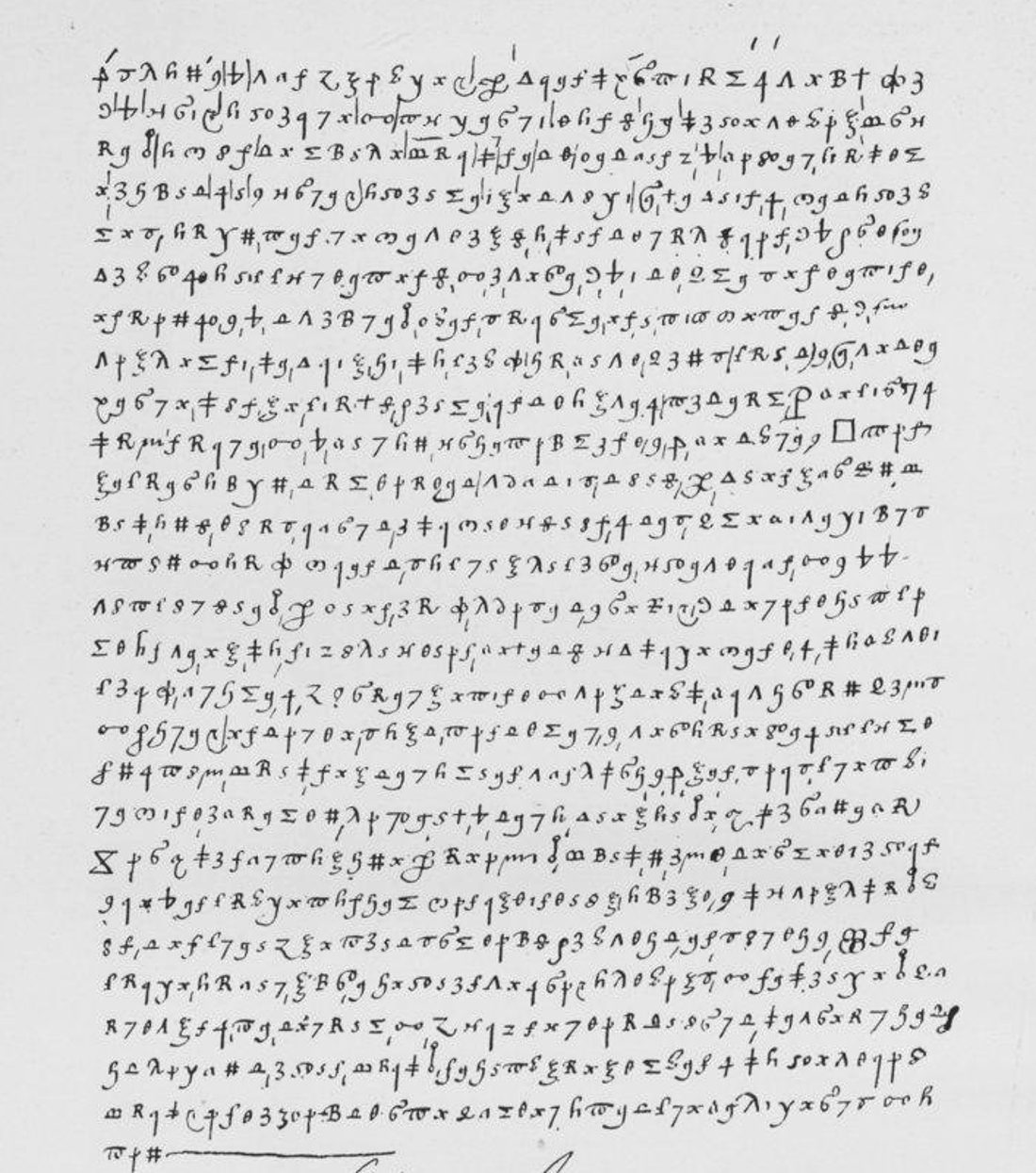
Paul Destray printed the address as “A monsr du Croq, mon conseiller et me d’hostel ordinaire et mon ambassadeur en Escosse” and catalogued the item as document XLIII, S. l. n. d.: without place or date. He noted that the letter, its addition, and the King’s second signature were in cipher; Pinart countersigned it. The two following facsimile leaves are the same images now served by DECODE.
DECODE’s structured date spans 1550–1574 but supplies day and month as 1 January; the catalogue flattened that into “1 Jan 1550.” That cannot be a document date: Charles IX was born on 27 June 1550. Cryptiana’s cautious “1565–1567 or 1572” follows the periods in which du Croc served in Scotland and is retained here. The contents fit the minority of James VI, but they do not distinguish those missions securely.
02 George Lasry’s prior solution
Tomokiyo’s page George Lasry’s Solutions of Unsolved Ciphers
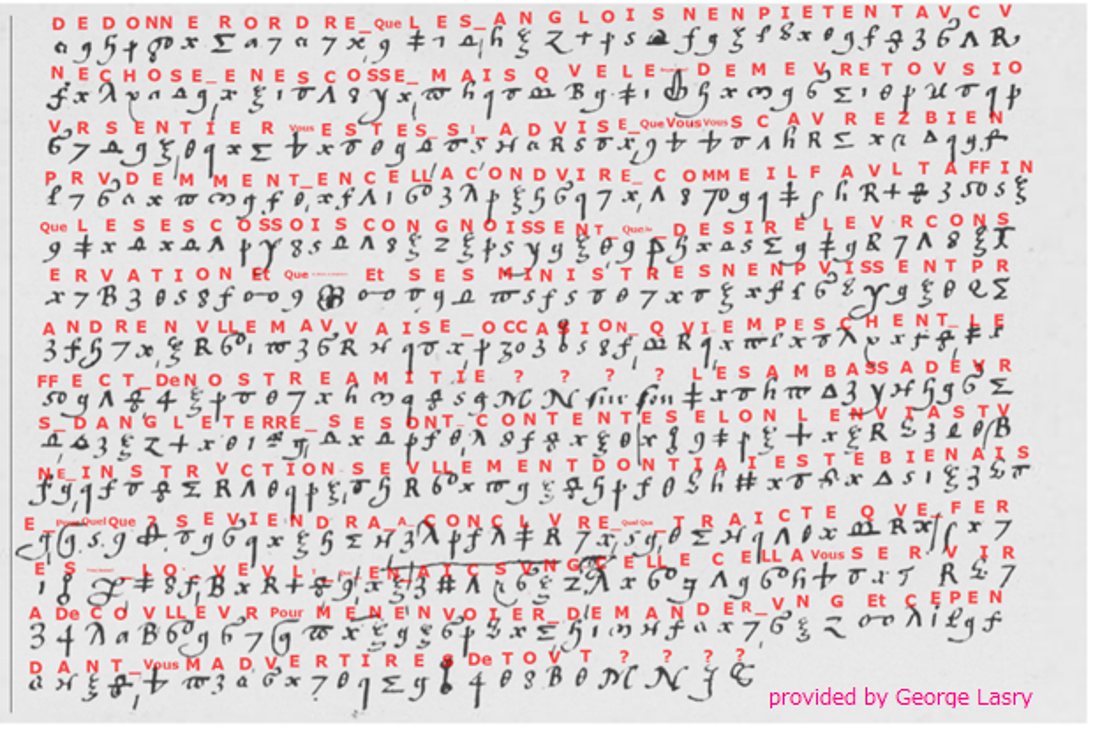
has a section headed “Charles IX to Philibert du Croc (1565–1567 or 1572).” Beneath the manuscript it says “This is solved as follows” and reproduces Lasry’s plaintext in red directly over the signs on both pages. The overlay lies on the same two pages: page geometry, line breaks, signatures and the postscript agree throughout.
The system is a French homophonic nomenclator: several graphic signs can represent letters, while other signs stand for whole words or names. Lasry’s displayed key includes values such as de, et, que, par, pour, je, vous, la Royne d’Angleterre, la Royne d’Escosse, and royaulme. It is not the symbol system used in Catherine de Médicis’s separate letter to du Croc of 27 April 1567.
03 What the cipher says
The opening tells du Croc that he knows both the man and those with whom he must deal, and that his demonstrated devotion makes further advice unnecessary. He is to follow the instructions already given and those now sent, especially “le bien de la paix du dict pais.” Charles then turns from what can presently be done for “ma seur” to the young King:
Je desire que mon nepveu aussy sur toutes choses soit bien nourri, qu’il ait tousjours, à l’imitation de ses predecesseurs, à moi et aux miens sa principalle affection.
Du Croc is to attend closely to the settlement of Scotland’s peace, government, and council. Without revealing that the direction comes from Charles, he must ensure that James neither marries nor concludes a marriage before Charles has been informed and can send his intention. Above all, he is to retain the hearts of the Scots so that their accustomed affection for the French kings does not diminish.
The postscript is blunter:
Ce que vous avez principalement affaire par delà est de donner ordre que les Anglois n’empiètent aucune chose en Escosse…
Du Croc must act prudently, make the Scots recognize that France seeks their preservation, and avoid occasions that could obstruct the friendship. The closing lines mention the English ambassadors and a possible treaty, but the gaps in the overlay are too large for a continuous translation. The repository preserves a line-by-line diplomatic transcription and a normalized summary.
04 What remains uncertain
- The original has no surviving date or place; 1565–67 or 1572 is a range of possible dates.
- Destray names the Nièvre archive and the Bourg de Bozas collection but gives no exact cote.
- Lasry’s overlay has several explicit `????` groups. Other short phrases are partly obscured by the signs at the available resolution.
- No independent symbol-by-symbol transcription was made and no complete key was rebuilt here. The outcome is an existing decipherment, transcribed and checked against the images.
Full texts
The transcription and the decryption of every document on this page, so that the reading can be used and checked. Short files are shown here; all are in the repository.
Charles IX to Philibert du Croc, undated (1565-67 or 1572) read in part
Charles IX tells his ambassador in Scotland, Philibert du Croc, to use his judgment and follow his instructions for the country's peace; above all his nephew, the young James VI, is to be well brought up, keep the Scots' traditional attachment to France, and not marry before Charles has been told and can send his intention. The postscript orders him to keep the English from gaining a foothold in Scotland. READING.md is a working transcription of George Lasry's plaintext overlay published on Tomokiyo's cryptiana GL.htm (25 May 2022), with its gaps kept.
Builds coherent sentences, but under the read bar of 95% of words read as sense (93% here); the holes are marked in the reading.
Decryption
# Reading of Charles IX to Philibert du Croc

Source: George Lasry's plaintext overlay, published by Satoshi Tomokiyo on Cryptiana, 25 May 2022. This is a diplomatic working transcription of that overlay, checked against the DECODE and Gallica facsimiles. Capitalization and `V/U` follow the overlay. Brackets mark material that is hidden, unread, or too uncertain to assert; the overlay itself prints several groups as question marks.

## Recto

> JE SCAIS […] CONGNOISSES […] BIEN L'HOMME […] CEULX A
> […] AVES AFFAIRE ET M'ASSVRANT DE L'AFFECTION QV'A-
> VES A MON SERVICE QV'IL N'EST BESOINQ DONNER AULTR-
> E ADVIS […] AVRES AFFAIRE EN ESCOSSE LE BIEN DE MES AFFAI-
> RES AVSSI M'EN REMECTANT A L'INSTRUCTION QVI FVT
> BAILLEE APPARTEMENT ET A CELLE QVE EST PRESENTEMENT
> ENVOIEE […] SCAVRES BIEN SVIVRE EN MESME MENT QVE
> CONCERNE LE BIEN DE LA PAIX DV DICT PAIS PVIS […] CESTE
> HEVRE L'ON NE PEVLT FAIRE INSTANCE DE MA SEVR […] DE PEVR
> LVI NVIRE ET […] DIRAI […] L'OVVRANT JE DESIRE QVE MON
> NEPVEV AVSSI SVR TOVTES CHOSES SOIT BIEN NOVRRI Q-
> V'IL AIT TOVSIOVRS A L'IMITATION DE SES PREDECESSEVRS
> A MOI ET AVX MIENS SA PRINCIPALLE AFFECTION ET QVE VOVS
> COMPORTIES […] BIEN AVX CHOSES QVE VERRES QVI SERONT D'IMPO-
> RTANCE EN LA NEGOCIATION DE L'ESTABLISSEMENT DE LA DICTE
> PAIX ORDRE GOVVERNEMENT ET CONSEIL D'ICELLVI PAIS
> ET FERES EN SORTE SANS MONSTRER […] CELLA VIENNE DE PART
> NI DE MOI QV'IL NE SE MARIE […] QVE JE M'EN SOIS PREMIE-
> REMENT ADVERTI COMME IL SERA BIEN AISE PAR LA VOI
> […] OV PAR LA NORMANDIE […] VEOIR QV'IL JAIT SEVRETE AFFIN
> QVE IL EN PUVISSE MANDER MON INTENTION AVANT QVE LA CONCLVSI-
> ON S'EN PRENGNE MAIS SVR TOVT FAICTES EN SORTE […] ME
> PVISSE AVOIR NVLLE DEFFIANCE DE VOS ACTIONS ET NE LAISSES PO-
> VRTANT ME SERVIR ET GAIGNER TOVSIOVRS LE CUEVR DES
> ESCOSSOIS AFFIN QV'ILS NE DIMINVĒT RIEN DE L'AFFECTION
> QV'ILS ONT ACCOVSTVME PORTER A MES PREDECESSEVRS ET A
> MOI

Postscript, beginning at the foot of the recto:

> CE QVE VOVS AVES PRINCIPALLEMENT AFFAIRE PAR DELA EST

## Verso

> DE DONNER ORDRE QVE LES ANGLOIS N'EMPIETENT AVCV-
> NE CHOSE EN ESCOSSE MAIS QVE […] DEMEVRE TOVSIO-
> VRS ENTIERS VOVS ESTES SI ADVISE QVE VOVS VOVS SCAVREZ BIEN
> PRVDEMMENT EN CELLA CONDVIRE COMME IL FAVLT AFFIN
> QVE LES ESCOSSOIS CONGNOISSENT QVE […] DESIRE LEVR CONS-
> ERVATION ET QVE […] ET SES MINISTRES N'EN PVISSENT PR-
> ENDRE NVLLE MAVVAISE OCCASION QVI EMPESCHENT LE
> EFFECT DE NOSTRE AMITIE […] LES AMBASSADEVR-
> S D'ANGLETERRE SE SONT CONTENTES SELON LE […]
> […] INSTRVCTION SEVLLEMENT DONT J'AI ESTE BIEN AIS-
> E […] SE VIENDRA A CONCLVRE […] TRAICTE QVE FER-
> ES […] LO[…] VEULT […] EN AIES VNG CELLE CELLA VOVS SERVIR-
> A DE COVLLEVR POVR M'EN ENVOIER DEMANDER VNG ET CEPEN-
> DANT VOVS M'ADVERTIRES DE TOVT […]

## Normalized sense

Charles says that du Croc knows the men with whom he must deal and needs no further advice. He should follow his earlier and current instructions, especially where the peace of Scotland is concerned. Because pressure cannot presently be applied on behalf of “my sister” without harming her, Charles turns to the welfare of “my nephew”: James VI is to be well brought up, retain the traditional affection of his predecessors for the French king and his house, and be surrounded by a peace, government, and council favorable to that end.

Du Croc is to ensure discreetly that James neither marries nor concludes a marriage before Charles is informed and can communicate his wishes. He must retain the hearts of the Scots and prevent any diminution of their accustomed attachment to France.

The postscript makes the strategic aim explicit: the English must not be allowed to encroach on Scotland. Du Croc is to act prudently so that the Scots recognize France's desire for their preservation, while avoiding incidents that could obstruct the friendship. Several final clauses—including part of the passage about the English ambassadors and a possible treaty—remain too incomplete in the published overlay for a responsible continuous translation.
Decryption: GL.htm
Reading
<!-- Reading of DECODE R2789 (Claude Opus 5.5, 23 Oct 2026): READING.md (a working transcription of George Lasry's plaintext overlay, published by Tomokiyo on Cryptiana GL.htm, 25 May 2022, checked against the DECODE and Gallica facsimiles) put into sentences: line breaks and line-end hyphens joined, capitals lowered, u/v by sense (the overlay writes V for both), punctuation editorial. No letter otherwise changed; "DIMINVĒT" written diminuent. […] = hidden, unread or too uncertain in the overlay, kept. The whole letter is cipher. -->

# Charles IX to Philibert du Croc, undated (1565-67 or 1572)

## Reading

Je sçais […] congnoisses […] bien l'homme […] ceulx a […] aves affaire, et m'assurant de l'affection qu'aves a mon
service, qu'il n'est besoinq donner aultre advis […] avres affaire en Escosse le bien de mes affaires, aussi m'en
remectant a l'instruction qui fut baillee appartement et a celle que est presentement envoiee […] sçavres bien suivre en
mesme ment que concerne le bien de la paix du dict pais, puis […] ceste heure l'on ne peult faire instance de ma seur […]
de peur lui nuire, et […] dirai […] l'ouvrant. Je desire que mon nepveu aussi sur toutes choses soit bien nourri, qu'il
ait tousiours, a l'imitation de ses predecesseurs, a moi et aux miens sa principalle affection, et que vous comporties
[…] bien aux choses que verres qui seront d'importance en la negociation de l'establissement de la dicte paix, ordre,
gouvernement et conseil d'icellui pais; et feres en sorte, sans monstrer […] cella vienne de part ni de moi, qu'il ne se
marie […] que je m'en sois premierement adverti, comme il sera bien aise par la voi […] ou par la Normandie […] veoir
qu'il [?jait] seurete, affin que il en puisse mander mon intention avant que la conclusion s'en prengne. Mais sur tout
faictes en sorte […] me puisse avoir nulle deffiance de vos actions, et ne laisses pourtant me servir et gaigner
tousiours le cueur des Escossois, affin qu'ils ne diminuent rien de l'affection qu'ils ont accoustume porter a mes
predecesseurs et a moi.

Ce que vous aves principallement affaire par dela est de donner ordre que les Anglois n'empietent aucune chose en
Escosse, mais que […] demeure tousiours entiers. Vous estes si advise que vous vous sçaurez bien prudemment en cella
conduire comme il fault, affin que les Escossois congnoissent que […] desire leur conservation, et que […] et ses
ministres n'en puissent prendre nulle mauvaise occasion qui empeschent le effect de nostre amitie. […] Les ambassadeurs
d'Angleterre se sont contentes selon le […] […] instruction seullement, dont j'ai este bien aise […] se viendra a
conclure […] traicte que feres […] lo[…] veult […] en aies ung celle cella vous servira de couleur pour m'en envoier
demander ung; et cependant vous m'advertires de tout […]
Translation
<!-- English translation of R2789_reading.md (Claude Opus 5.5, 23 Oct 2026), with the same holes […]; where a hole breaks the syntax the translation stays close to the words. -->

# Charles IX to Philibert du Croc, undated (1565-67 or 1572): English translation

I know […] you know […] well the man […] those with […] you have to deal; and being assured of the affection you have
for my service, [I know] there is no need to give other advice […] you will have to deal in Scotland [for] the good of my
affairs, also referring myself to the instruction that was given separately and to the one now sent […] you will well
know how to follow likewise in what concerns the good of the peace of the said country; since […] at this hour no
instance can be made for my sister […] for fear of harming her, and […] I shall say […] opening it. I wish that my nephew
also, above all things, be well brought up; that he should always, in imitation of his predecessors, bear his principal
affection to me and mine; and that you conduct yourself […] well in the things you will see that are of importance in
the negotiation of the establishment of the said peace, order, government and council of that country; and you will
see to it, without showing […] that it comes from my part or from me, that he does not marry […] before I am first
informed of it, as will be easy by way of […] or through Normandy […] to see that there is safety, so that he may send
him my intention before the conclusion is reached. But above all act so that […] can have no distrust of your actions,
and nevertheless do not fail to serve me and always win the hearts of the Scots, so that they lessen nothing of the
affection they have been accustomed to bear my predecessors and me.

What you have principally to do over there is to give order that the English encroach on nothing in Scotland, but that
[…] remain always entire. You are so well advised that you will know how to conduct yourself very prudently in this as
is needed, so that the Scots know that […] desires their preservation, and that […] and her ministers cannot take any
bad occasion from it that would hinder the effect of our friendship. […] The ambassadors of England have been satisfied
according to the […] […] instruction only, at which I have been very glad […] will come to conclude […] treaty that you
will make […] wishes […] you have one; that will serve you as a pretext to send to ask me for one; and meanwhile you will
inform me of everything […]
05 Sources
- DECODE R2789, record and authenticated images.
- Paul Destray, Philibert Du Croc : un diplomate français du XVIe siècle (1924), document XLIII, p. 80 and the following facsimile leaves.
- Satoshi Tomokiyo,
George Lasry’s Solutions of Unsolved Ciphers
, with George Lasry’s key and two-page plaintext overlay, 25 May 2022.
Working notes and the transcription of Lasry’s plaintext, with its gaps kept, are in targets/charlesixducroc/.