At a glanceCiphertext-only break · partial (96% of the cipher)
- The letter
- A French letter of the seventeenth century from a client or servant at Nancy, in December, to a “Monsieur” whose favour he asks; signed with a name read “Nicle”(?). It runs f. 243 → f. 241; the image of f. 242 is the same leaf as f. 243 with the flap folded down. A proposed identification of the persons is given below as a hypothesis.
- Where
- The National Archives, Kew, SP 106/10 ff. 241–243; DECODE R927, catalogued as an “undeciphered letter in the masonic alphabet”.
- The cipher
- A homophonic pigpen: nine cell shapes, each with one to three dots and sometimes an inner stroke, several symbols for the common letters, two of them polyphonic; a few special symbols for names. The pencilled key on the flap does not fit.
- How it was deciphered
- The key was recovered by annealing on a hand transcription of f. 243 and fixed with probable words. On 2 October 2026 ff. 241 and 242 were transcribed by hand and decoded with it, and four values were added. On 3 October every sign of every unread word was cut out at three to four times the size and read again; two more values were fixed and the share read rose from 84.0% to 95.6%.
- What it says
- Sorrow that the recipient, after the marriage of “ce gentilhomme”, believed something “au prejudice de l’entiere affection que j’ay vouée a vostre service”; a proposal to send someone to congratulate “Sa Majesté” on recovering from a long illness; the writer’s “zele … a son tres humble service”.
- Credit
- George Lasry reports that Sheila Richards decoded the letter in Secret Writings (1973). The book was not seen here; this reading is an independent re-solution.
- Still open
- Two short stretches of f. 241 under ink blots and a stain, and a few single signs, at the resolution of the only images; the 14 special symbols in name positions, which no surviving key explains; and so the sender’s identity, the recipient and the year. With these, the reading of f. 241 builds coherent sentences but reads at 90.1% of its words (measured 24 October 2026), under the 95% a complete reading needs.
01 The document and the pencilled key
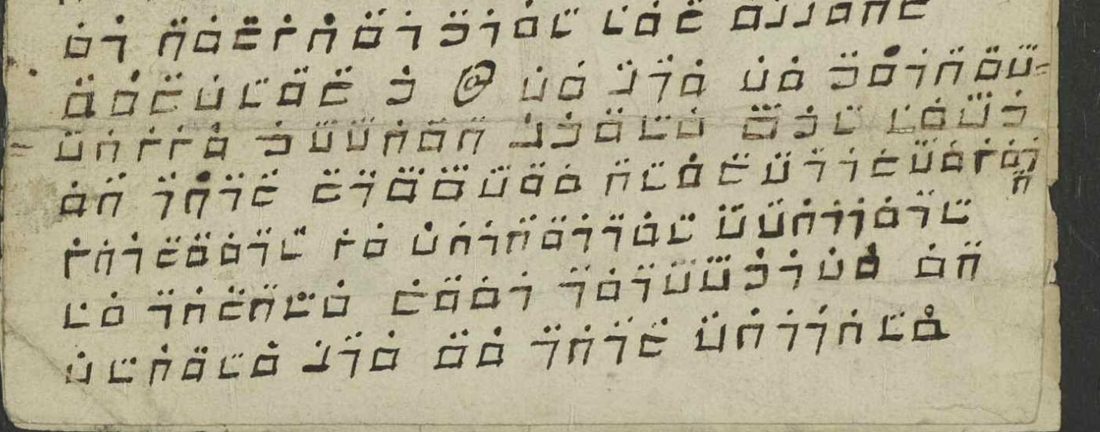
There are three images: f. 241, f. 242 with a paper flap pasted over part of it, and f. 243. The archive photographed the text sideways. Turned 90° anticlockwise, it runs in horizontal lines with word spaces. The flap carries a pencil grid, the standard dotted pigpen (a–i one dot, k–s two, t–z three). Applied to the letter it gives oeaeydakdorsefekdoi…, with g/q at 16% of the text and t almost absent. None of the 48 rotations, reflections and dot orders, and none of the 9! reassignments of shapes to cells, gives any language.
02 The system
Each symbol is one of the nine cell shapes, followed by one, two or (rarely) three dots, and sometimes with an inner stroke. The shape does not fix a group of letters: e is ◻·, ◻ with an inner mark, and one or two rarer forms; s has five or six symbols; i three. Working key (shape named by its open side; the digit is the dot count):
a ⊔1   b ⊓1   c ⊏1, ⊏ with bar 1   d Γ1   e ◻1 (+ inner-mark forms)   f/q L1   g ⊔2
h ⊏-bar 2   i ◻2 (+ variants)   l ⊏2, ⊏3   m ¬1   n ⌟1   o ⊐1   p ◻3   q L2
r Γ2, Γ3   s ⊓2 (+ variants)   t ⊐2, ⊔2   u/v ⌟2   y ¬2
L1 serves for both f (affection, effets) and q (que). It is either a polyphonic symbol or two variants not separated in transcription. Two circle or “9”-shaped symbols and a few stacked composites are unresolved. They stand where names or abbreviations are expected.
03 The decipherment of f. 243, the first page of the letter
First worked as the last page; the transcription of f. 241 on 2 October 2026 showed that the letter begins here (section 04). On 3 October every sign of the words not yet deciphered was cut out at three to four times the size and read again: the errors had been the open side of corner shapes, dot counts and inner strokes, and two signs the writer cancelled with an ink blot. Two values were corrected in the key (F*1 = l, from “que les occasions” twice; D*1 = o, from pouvois). A joint re-annealing of every value over the three pages raised the model score but turned g and h against gentilhomme, longue and humble, so it was not adopted.
The raw decryption after the re-reading of 3 October, one line per written line:
ienepouuoisreceuoid / unennuyplussensible / ayant_apprisquedunri / agedecegentilhomme /
lequelsaluadernierement / _ndelapartde_monmaitre / _usauiescreuquelqu / choseaupreiudice /
delentiereaffectionque / iayuoueauostreseruice / silfutestepersnnenfui / iepeusseprendreconfia /
nceuouseussiescongnupr / luyqueienecherisrien / tantquelesoccasionsdeuous / entesmoingnerdeseffets /
iescrisa_cequecegentil / hommealloetfaircpardela / etuoussupplietreshunblem / monsieurmecontinuerlhonneur /
deuostrebienueullanceet / croirequeieuoushonnor
(an _ is a special symbol or a sign lost to a blot or a hole; the first decryption of 19 September, before the re-reading, began ieneponunisreceuoid / … / lequessaluiderviedement.)
Regularised, with the doubtful parts marked:
Je ne pouvois recevoir d’un ennuy plus sensible, ayant [..] appris que du voiage de ce gentilhomme, lequel salua dernierement [67] de la part de [6] mon maistre, vous aviés creu quelques choses au prejudice de l’entiere affection que j’ay vouée a vostre service. S’il fut esté personne en qui je peusse prendre confiance, vous eussiés congnu par luy que je ne cheris rien tant que les occasions de vous en tesmoigner des effets. J’escris a [@] ce que ce gentilhomme alloit faire par dela, et vous supplie tres humblement, Monsieur, me continuer l’honneur de vostre bienveuillance et croire que je vous honnor[e] …
Translation: “I could not have received a keener sorrow than on learning that, from the marriage of this gentleman, who lately greeted [name] on behalf of [name] my master, you had believed some things to the prejudice of the entire affection I have vowed to your service. Had there been anyone in whom I could confide, you would have known through him that I cherish nothing so much as the occasions to show you its effects. I am writing to [name] about what this gentleman was going to do over there, and I beg you most humbly, sir, to continue me the honour of your goodwill, and to believe that I honour you …” The first decryption had read the middle of the page as “Je ne vous dis rien” and left most of it open.
04 The close of the letter (f. 241), and f. 242
On 2 October 2026 both remaining pages were transcribed by hand, every symbol read by eye from enlarged, deskewed strips, and decoded with the key (polyphonic symbols resolved word by word by a French language model). Two findings changed the shape of the letter:
- The page order is f. 243, then f. 241. f. 243 ends “et croire que je vous honnor-”; f. 241 begins “-e et cheris ce qui se peut” and ends with the subscription and the dateline. What was called the last page above is the first, and f. 241 is the close.
- f. 242 is not a second copy. It was first taken for one, line for line the same. WAINUT pointed out (October 2026), and the images confirm, that images P2 and P3 show the same leaf, with the same holes, blots and special symbol, photographed with the flap folded down and lifted. The agreement between the two transcriptions therefore checked the transcription, not the text.
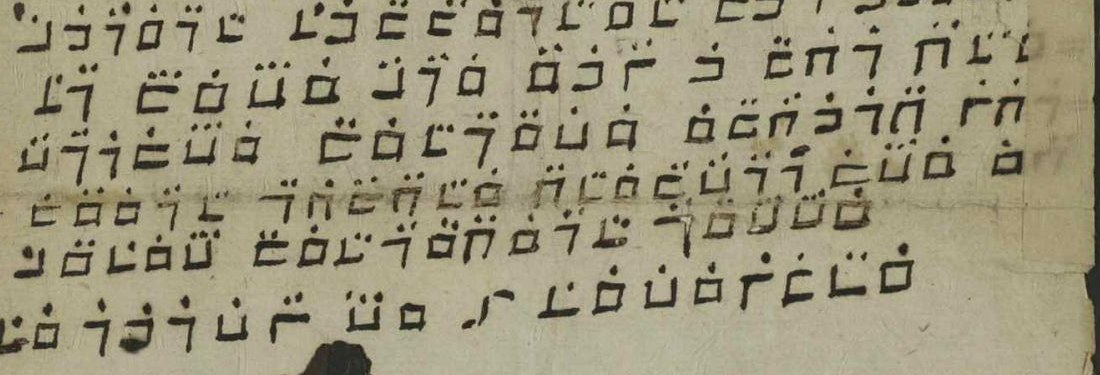
f. 241, regularised after the re-reading of 3 October; [..] marks symbols not read as sense, [name] a special symbol:
[… que je vous honnor]e et cheris ce qui se peut. S’y vous trouviés a propos de disposer [67] d’envoier ledit [@] de la part de Sa Majesté vers [6] pour se resjouir de sa santé apres la longue maladie qu’il a eue, je m’asseure que les personnes que vous aimés n’en seroint marris, et de mon costé je leur ouvriray mon coeur de tout ce que je jugeray estre du [..] [67] et du [..] (WAINUT conjectures du service du [67] et du vostre), vous conjurant me faire la faveur d’asseurer Sa Majesté du zele que j’ay a son tres humble service, estant, Mo-sieur, vostre tres humble et fidel serviteur [Nicle? or Ville?]. De Nancy le [day] decembre.
“… and cherish you as much as can be. If you thought fit to arrange for [name] to send the said [name] on behalf of His Majesty to [name], to rejoice at his health after the long illness he has had, I am sure that the persons you love would not be sorry for it; and for my part I will open my heart to them on all that I judge to be of [..], begging you to do me the favour of assuring His Majesty of my zeal for his most humble service, being, sir, your most humble and faithful servant [Nicle?]. Nancy, the [..] of December.”
Three readings here come from an independent transcription and key by WAINUT (October 2026), whose 20 symbol values all agree with ours: voiage on f. 243 (we had read mari-age with one symbol unread), Mo-sieur before the subscription, and the separation of the special symbols into three: a “67” (a king, “Sa Majesté”), a “6” (the writer’s master, recovering from a long illness) and a circled symbol [@], a man who could be sent from one to the other. The signature is still open between Nicle and Ville: the two transcriptions differ in the dots of two symbols, which the images cannot settle.
Who (a hypothesis, WAINUT). If the signature is Ville, the writer may be Henri de Livron, marquis de Ville, gentleman of the chamber of Charles IV, Duke of Lorraine, and his envoy to Charles I in 1628–29; [6] would be Charles IV, [67] Charles I, the “Monsieur” perhaps Henry Rich, Earl of Holland, and the year perhaps 1629. Ville appears in the Calendar of State Papers Venetian XXI (April 1628) and Domestic 1628–29 as the Duke’s envoy, and in 1629 dealing with Holland. No document names the persons of this letter, and the identification fails if the signature is Nicle.
Measured (a word counts when its decrypt differs from the regular word by at most one letter): 843 of the letter’s 882 symbols read as sense (95.6%), f. 243 98.3% and f. 241 92.5%; leaving out the 14 special symbols in name positions, 97.1%. On 2 October, before the sign-by-sign re-reading, the figure was 84.0% (f. 243 81.7%, f. 241 86.5%). On 2 October four values were added to the key: H3 = z (zele), C*2 = q (ce qui), and two polyphones, C1 = f/q (faveur, confiance against que, qu’il) and F2 = l/h (plus against cheris, gentilhomme); C3 = l and A*2 = q are provisional, one occurrence each.
Neighbouring records. R922–R933 were opened on DECODE: R923–R925, R928 and R929 are the digit code of the Henrietta Maria and Goffe letters of 1645–46, R930 a strip of alchemical-type symbols, R931–R932 numeric, R933 a key sheet with English names. None is in this pigpen, and none carries a decipherment or clear copy of R927.
05 Method
The glyph boxes and dots were segmented automatically, then corrected by eye from enlarged crops. The solver is simulated annealing over a homophonic key, scored by French, English, Latin and nine other quadgram models, with a letter-frequency penalty. It was tested first on synthetic homophonic text, with and without 10% noise. On the automatic transcription every language failed (best −4.5/char, no words). On the hand transcription French scored clearly best (−4.39), and the solver output contained que dun, de la part de, plus. The key was then fixed from whole words and the solver run again.
06 What remains uncertain
- Writer, recipient and year: the letter is dated at Nancy in December and signed with a name read “Nicle”(?), perhaps a contraction; the recipient is “Monsieur”; the gentleman whose journey is mentioned is not named. WAINUT’s hypothesis (above) would make the writer the marquis de Ville and the year 1629; it rests on the signature. The names sit in the special symbols. No docket or address leaf survives in the record, and without a year or a name the calendars cannot be searched. The formulae and spelling point to French of the seventeenth century.
- The special symbols (circle/“9” forms, stacked composites): not decoded, probably names or titles.
- f. 243 reads in full but for two signs lost to a blot (line 3) and a paper hole (line 7); there is no second copy (the f. 242 image is the same leaf). The closing formulae are secure (H), the rest C.
- f. 241: the close and the dateline are secure (H). Counted by words, its reading reads at 90.1% (24 October 2026), under 95%. Two stretches stay unread: b_ruiledu … et du uoii in line 13 (“de tout ce que je jugeray estre du [..] [67] et du [..]”) and bienr before the subscription (now deciphered sieur after WAINUT), under ink blots and a stain, plus single signs at three line ends and the day of the date. f. 241 has no second copy, the National Archives have not digitised SP 106, and DECODE holds only these 2,300-pixel images, so this is the limit until the leaf or a better photograph is seen. They are the reason f. 241 is at 92.5% while the letter is over 95%: the project’s threshold for a complete text (95% of the cipher gives sense) admits gaps blocked from outside, and these are.
- Writer’s spellings kept as read: alloet, fairc, hunblem, persnne, bienveullance.
Full texts
The transcription and the decryption of every document on this page, so that the reading can be used and checked. Short files are shown here; all are in the repository.
f. 243, the first page of the letter: this project's reading, and WAINUT's independent one
A letter in French in a pigpen cipher, from Nancy in December, year unknown: the writer says he could receive no more sensible displeasure, on learning of the voyage (or marriage) of 'ce gentilhomme', saluted lately 'de la part de mon maistre', to the prejudice of the affection he has vowed to the recipient's service, and begs him to continue his goodwill. reading.txt is this project's reading of all three pages; wainut/plaintext_R927.txt is WAINUT's independent transcription and reading of ff. 243 and 241, kept as a separate file.
Transcription
# f. 243 (p. 3), archive orientation, columns right->left, top->bottom; '*' = inner stroke; '@' = circle/9 sign.
# Re-read 3 Oct 2026 sign by sign from 3x tiles of every glyph (v3_glyphs2.json boxes, offset +80/+880 on the
# DECODE image): c0, c2, c4-c6, c8, c9, c11, c13-c16, c21, c22 corrected. The 5-sign fragment v3 "c12" is the head of
# c11 ("s i l f"); v3 "c7" is dots and a stain. '?' = dot count or shape uncertain; [hole]/[blot] = sign lost.
c0: E2 E1 A1 E1 E3 D1 A2 A2 D*1 E2 H*2 I2 E1 F1 E1 A2 D1 E2 I1
c1: A2 A1 E1 A1 A1 A2 G2 E*3 F3 A2 I*2 H2 E1 A1 H2 E2 H1 F2 E*1
c2: B1 G2 B1 A1 D2 [blot] B1 E3 E3 I2 E2 H*2 C2 A2 E*1 I1 A2 A1 D*2 E2
c3: B1 B*2 E1 I1 E*1 F1 E1 B2 E1 A1 D2 E2 F*3 F2 D1 G1 G1 E1
c4: F3 E1 C2 A2 E1 F3 H2 B1 F3 A2 B1 I1 E1 I2 A1? E2 E1 I2? E1 G1 E1 A1 D2
c5: @ A1 I1 E1 F2 B1 E3 B1 I2 D2 I1 E1 @ G1 D1 A1 G1 B1 E2 D2? I2? E1
c6: [hole] A2 H2 B1 A2 E*2 E1 H2 F1 I2 E1 A2 C2 A2 E1 F3 C1 A2
c8: F1 F2 D1 H2 E*1 B1 A2 E3 I2 E1 E2 A2 I1 E2 F1 E*1
c9: I1 E1 F2 E1 A1 D2 E2 E1 I2 E1 B1 C1 C1 E1 F1 D2 E2 D1 A1 C2 A2 E1
c10: E2 B1 G2 A2 D1 A2 E1 B1 A2 D1 H2 D2 I2 E1 H2 E1 I2 A2 E2 K1 E1
c11: H2 E2 F3 C1 A2 D2 E1 H2 D2 E1 E3 E1 I2 H2 A1 A1 E1 A1 C1 A2 E2
c13: E2 E1 E3 E1 A2 H2 H*2 E1 E3 I2 E1 A1 I1 I2 E1 F1 D1 A1 C1 E2 B1 =
c14: A1 F1 E1? A2 D1 A2? H*2 E1 A2 H*2 H*2 E2 E1 H*2 F1 D1 A1? B2? A1 A2 E3 I2
c15: F2 A2 G2 C2 A2 E1 E2 E1 A1 E1 F1 F2 E1 I2 E2 H2 I2 E2 E1 A1
c16: D2 B1 A1 D2 C1 A2 E1 F*1 E1 H2 D1 F1 F1 B1 H2 E2 D1 A1 H2 I1 E1 A2 D1? A2 H2
c17: E1 A1 D2 E1 H*2 G1 D1 E2 A1 B2 A1 E1 I2 I1 E1 H2 E1 C1 C1 E1 D2 H*2
c18: E*2 E1 H2 F1 I2 E*2 H2 B1 @ F1 E1 C2 A2 E1 F1 E1 B2 E1 A1 D2 E2 F3
c19: F2 D1 G1 G1 E*1 B1 F3 F2 D1 E1 D2 C1 B1 E2 I3 F1 E3 B1 I2 I1 E1 F3 B1
c20: E*1 D2 A2 D1 A2 H2 H*2 A2 E3 E3 F2 E*2 E1 D2 I2 E*1 H2 K2 A2 A1 H1 F2 E*1 G1
c21: G1 D1 A1 H*2 E2 E1 A2 I2 G1 E1 F1 D1 A1 D2 E2 A1 A2 E*1 I2 F2 F2 D1 A1 A1 E1 A2 I2
c22: I1 E1 A2 D1 H2 D2 I3 E1 H1 E2 E1 A1 A2 E1 A2 F2 F3 B1 A1 F1 E*1 E1 D2
c23: F1 I2 D1 E2 I2 E1 C1 A2 E1 E2 E1 A2 D1 A2 H2 K2 D1 A1 A1 D1 I2
Transcription
# DECODE R927 (TNA SP 106/10, ff. 241-243) - manual transcription, second pass
# Images must be rotated 90 deg CCW; then lines read left->right, top->bottom; dots sit above glyphs.
# Token = shape letter + dot count (see key_R927.tsv; E = C-shape with middle bar, same symbol as C).
# | word gap   = line-end hyphen   #67 #6 #@ code signs   ## illegible/stain/blot   #STRIKE struck-out   ? uncertain
# Page 1 = IMG_R927_I4922_P2 / I4923_P3 (same sheet; P3 shows the flap lifted). Page 2 = IMG_R927_I4921_P1 lower half.

## PAGE 1
00: O2 O1 | 71 O1 | O3 N1 72 72 N1 O2 E2 | L2 O1 U1 O1 72 N1 O2 L2
01: 72 71 | O1 71 71 72 F2 | O3 U3 72 E2 | C2 O1 71 C2 O2 C1 U3 O1
02: D1 F2 D1 71 N2 | ## | D1 O3 O3 L2 O2 E2 | J2 72 O1 | L1 72 | 72 N1 O2 =
03: D1 D2 O1 | L1 O1 | U1 O1 | D2 O1 71 N2 O2 U3 U2 N1 F1 F1 O1
04: U3 O1 J2 72 O1 U3 | E2 D1 U3 72 D1 | L1 O1 L2 71 O2 O1 L2 O1 F1 O1 71 N2
05: #67 | L1 O1 | U3 D1 | O3 D1 L2 N2 | L1 O1 | #6 | F1 N1 71 | F1 D1 O2 N2 L2 O1
06: ## N1? 72 E2 | D1 72 O2 O1 E2 | U1 L2 O1 72 | J2 72 O1 U3 J2 72 O1
07: U1 U2 N1 E2 O1 | D1 72 | #STRIKE | O3 L2 O1 O2 72 L1 O2 U1 O1 #,
08: L1 O1 | U3 O1 71 N2 O2 O1 L2 O1 | D1 J1 J1 O1 U1 N2 O2 N1 71 | J2 72 O2
09: O2 D1 F2 | 72 N1 72 O1 | D1 | 72 N1 C2 N2 L2 O1 | C2 O1 L2 72 O2 U1 O1 #,
10: C2 O2 U3 | J1 72 N2 | O1 C2 N2 O1 | O3 O1 L2 C2 N1? 71 71 O1? | O1 71 | J2 72 O2
11: O2 O1 | O3 O1 72 C2 C2 O1 | O3 L2 O1 71 L1 L2 O1 | U1 N1 71 J1 O2 D1 =
12: = 71 U1 O1? | 72 N1 72 C2 | O1 72 C2 C2 O2 O1 E2 | U1 N1 7?1 D2 71 72 | O3 D1? L2
13: U3 72 F2 | J2 72 O1 | O2 O1 | 71 O1 | U1 U2 O1 L2 O2 C2 | L2 O2 O1 71
14: N2 D1 71 N2 | J2 72 O1 | U3 O1 C2 | N1 U1 U1 D1 C2 O2 N1 71 C2 | L1 O1 | 72 N1 72 C2
15: O1 71 | N2 O1 C2 F1 N1 O2 71 D2 71 O1 L2 | L1 O1 C2 | O1 J1 J1 O1 N2 C2
16: O2 O1 E2 U1 L2 O2 C2 | D1 | #@ | U1 O1 | J2 72 O1 | U1 O1 | D2 O1 71 N2 O2 U3 =
17: = U2 N1 F1 F1 O1 | D1 U3 U3 N1 O2 N2 | J1 D1 O2 L2 O1 | O3 D1 L2 | L1 O1 U3 D1
18: O1 N2 | 72 N1 72 C2 | C2 72 O3 O3 U3 O2 O1 | N2 L2 O1 C2 | U2 72 F1? C1 U3 O1 F1 O1 71 N2
19: F1 N1 71 C2 O2 O1 72 L2 | F1 O1 | U1 N1 71 N2 O2 71 72 O1 L2 | U3 U2 N1 71 71 O1 72 L2
20: L1 O1 | 72 N1 C2 N2 L2 O1 | C1 O2 O1 71 72 O1 72 U3 U3 D1 71 U1 O1 | O1 N2
21: U1 L2 N1 O2 L2 O1 | J2 72 O1 | O2 O1 | 72 N1 72 C2 | U2 N1 71 71 N1 L2 O1

## PAGE 2
00: O1 N2 | U1 U2 O1 L2 O2 C2 | U1 O1 | J2 72 O2 | C2 O1 | O3 O1 72 N2 | C2 F2
01: 72 N1 72 C2 | N2 L2 N1 72 72 O2 O1 C2 | D1 | O3 L2 N1 O3 N1 C2 | L1 O1
02: L1 O2 C2 O3 N1 C2 O1 L2 | #67 | L1 O1 71 72 N1 O2 O1 L2 | U3 O1 L1 O2 N2
03: #@ | L1 O1 | U3 D1 | O3 D1 L2 N2 | L1 O1 | C2 D1 | F1 D1 O2 O1 C2 N2 O1 | 72 O1 L2 C2
04: #6 | O3 N1 72 L2 | C2 O1 | L2 O1 O2 N1 72 O2 L2 | L1 O1 | C2 D1 #-
05: #- | C2 D1 71 N2 O1? | D1 O3 L2 O1 C2 | U3 D1 | U3 N1 71 D2 72 O1
06: F1 D1 U3 D1 L1 O2 O1 | J2 72 O2 U3 | D1 | O1 72 | O2 O1 | F1 D1 C2 C2 =
07: O1 72 L2 O1 | J2 72 O1 | U3 O1 C2 | O3 O1 L2 C2 N1 71 71 O1 C2 | J2 72 O?
08: 72 N1 72 C2 | D1 O2 F1 O1 C2 | 71 O1 71 | C2 O1 L2 N1 O2 71 N2 | F1 D1 L2? L2? O2 O1
09: O1 N2 | L1 O1 | ## | F1 N1 71 | U1 N1 C2 N2 O1 | O2 O1 | U3 72 F2 | N1 72? =
10: = 72 L2? O2 L2 D1 O2? | F1 N1 71 | U1 N1 O1 72 L2 | L1 O1 | N2 N1 72 N2 | U1 O1
11: J2 72 O1 | O2 O1 | O2 72 O2(g?) O1 L2 D1 F2 | O1 C2 N2 L2 O1 | L1 72
12: ## ## L2 72 O2 U1 O1 | L1 72 | #67 | O1 N2 | L1 72 | 72 N1 C2 ## ##
13: 72 N1 72 E2 | U1 N1 71 O2 72 L2 D1 71 N2 | F1 O1 | J1 D1 O2 L2 O1 | U1 ##
14: J1 D1 72 O1 72 L2 | L1 D1 C2 C2 O1 72 L2 O1 L2 | C2 D1 | F1 D1 ## O1? C2 N2 O1?
15: L1? 72 | C2 O1 U3 O1 | J2 72 O1 | O2 D1 F2 | D1 | C2 N1 71 | N2 L2? ##
16: U2 72 F1 C1 U3 O1 | C2 O1 L2 72 O2 U1 O1 | O1 C2 N2 D1 71 N2 | F1 N1 =
17: = C2 O2 O1 72 L2 | 72 N1 C2 N2 L2 O1 | N2 L2 O1 C2 | U2 72 F1 C1 U3 O1 | O1 ## | #ABOVE: O? U? U? O?
18: J1 O2 L1 O1 U3 | C2 O1 L2 72 O2 N2 O1 72 L2 | 7?2 O2 U3 U3 O1
19: L1 O1 | 71 D1 71 U1 F2 | U3 O1 | #DAY | L1 O1 U1 O1 F1 C1 L2 O1
Decryption
# SP 106/10 ff. 241-243 (DECODE R927): reading of all three pages (pass 2, 3 Oct 2026)
# Each line: page.column | marked decrypt | regularised French
# Marked decrypt = exactly the output of `python dec2.py hand_pN.txt` (key.json), with only spaces and marks added:
#   <...> = signs NOT read as sense (wrong letters, lost signs '_'); {...} = code signs and proper names (the '@'
#   circle/9 signs, the numeral 67, the date numeral, the signature), counted separately.
# A word is counted as read when its decrypt differs from the regular word by at most one letter.
# measure.py checks that the marks add nothing to the decrypt and counts the shares.
#
# The letter runs f. 243 -> f. 241. Corrected 12 Oct 2026 (WAINUT, PR #30): f. 242 (image P2) is NOT a second copy; it is
# the same leaf as f. 243 (P3) photographed with the flap down, so the p2 lines below re-transcribe f. 243 and check the
# transcription only. Regularised column revised after WAINUT: 'du voiage' (p3.c2-c3), 'Mo-sieur' (p1.c16-c17), code
# signs split into [67], [6] and the circled sign [@]; their c12 '[se]ruice du [67] et du uos[tre]' is a conjecture.
# The marked decrypts (from hand_p*.txt) are unchanged.
#
# f. 243 (p. 3), hand_p3.txt (v3 'c7' and 'c12' are a stain and the head of c11, not columns)
p3.c0  | ie ne pouuois receuoi d | je ne pouvois recevoir d'
p3.c1  | un ennuy plus sensible | un ennuy plus sensible,
p3.c2  | ayant <_> appris que du<n>ri | ayant [..] appris que du voi- [WAINUT; hand_p3 'nri']
p3.c3  | age de ce gentilhomme | -age de ce gentilhomme
p3.c4  | lequel salua dernierement | lequel salua dernierement
p3.c5  | {_n} de la part de {_} mon maitre | [67] de la part de [6] mon maistre,
p3.c6  | <_>us auies creu quelqu | vous aviés creu quelqu-
p3.c8  | chose au preiudice | -es choses au prejudice
p3.c9  | de lentiere affection que | de l'entiere affection que
p3.c10 | iay uoue a uostre seruice | j'ay vouée a vostre service:
p3.c11 | sil fut este persnne <n>fui | s'il fut esté personne en qui
p3.c13 | ie peusse prendre confia | je peusse prendre confia-
p3.c14 | nce uous eussies congnu pr | -nce, vous eussiés congnu par
p3.c15 | luy que ie ne cheris rien | luy que je ne cheris rien
p3.c16 | tant que les occasions de uous | tant que les occasions de vous
p3.c17 | en tesmoingner des effets | en tesmoigner des effets.
p3.c18 | iescris a {_} ce que ce gentil | J'escris a [@] ce que ce gentil-
p3.c19 | homme alloet fairc par dela | -homme alloit faire par dela,
p3.c20 | et uous supplie tres hunblem | et vous supplie tres humblem[ent],
p3.c21 | monsieur me continuer lhonneur | Monsieur, me continuer l'honneur
p3.c22 | de uostre bienueullance et | de vostre bienveuillance et
p3.c23 | croire que ie uous honnor | croire que je vous honnor-
#
# f. 241 (p. 1), hand_p1.txt: the end of the letter, subscription and dateline
p1.c0  | et cheris ce qui se peut sy | -e et cheris ce qui se peut. S'y
p1.c1  | uous trouuies a propos de | vous trouviés a propos de
p1.c2  | disposer {_} denuoier ledit | disposer [67] d'envoier ledit
p1.c3  | {_} de la paru de sa maieste uers | [@] de la part de Sa Majesté vers
p1.c4  | {_} pour se reiouir de sa | [6] pour se resjouir de sa
p1.c5  | sante apres la longue | santé apres la longue
p1.c6  | maladie quil a eu iemass | maladie qu'il a eue, je m'ass-
p1.c7  | eure que les personnes que | -eure que les personnes que
p1.c8  | uous aimes nen seroint marie | vous aimés n'en seroint marris,
p1.c9  | et de mon foste ie lur ou | et de mon costé je leur ou-
p1.c10 | uriray mon coeur de tout ce | -vriray mon coeur de tout ce
p1.c11 | que ie iuieray estre du | que je jugeray estre du
p1.c12 | <b_ruiledu> {_} et du <uoii> | [..] [67] et du [..], (WAINUT conjecture: du [se]rvice du [67] et du vos[tre])
p1.c13 | uous coniurant me faire la <_> | vous conjurant me faire la
p1.c14 | faueur dasseurer sa maieso | faveur d'asseurer Sa Majesté
p1.c15 | du zele que iay a son tr<_> | du zele que j'ay a son tr[es]
p1.c16 | hunble seruice estant mo | humble service, estant, Mo[nsieur],
p1.c17 | <bienr> uostre tres hunble e | [sieur, WAINUT] vostre tres humble e[t]
p1.c18 | fidel seruiteur {nicle} | fidel serviteur [signature, read "Nicle"; WAINUT "Ville"; open]
p1.c19 | de nancy l<_> {_} decembre | De Nancy le [day] decembre
#
# f. 242 (p. 2), hand_p2.txt: image P2, the same leaf as f. 243 with the flap down (not a copy); [flap] signs (under the pasted flap) are not counted
p2.ca  | <_> eceuoir | [je ne pouvois r]ecevoir
p2.cb  | <_> ensible | [un ennuy plus s]ensible
p2.cc  | <_> <uecuuai> | [ayant appris q]ue du mari-
p2.cd  | <_> lhomme | [-age de ce genti]lhomme
p2.ce  | <_> <niedemeng> | [...]
p2.cf  | <__manmaigh> | [... mon maistre?]
p2.cg  | <_> quelque | [...] quelque
p2.ch  | close<gu___> preiudice | choses [..] prejudice
p2.ci  | de<q>entiere affection que | de l'entiere affection que
p2.cj  | iay uoue a uostre seruice | j'ay vouée a vostre service
p2.ck  | <silfutesteperlnneenqui> | [..]
p2.cl  | ie peusse prendre <f>onfia | je peusse prendre confia-
p2.cm  | <nfououseussseicauguupir> | [..]
p2.cn  | <lurque> ie ne <dqeris> rien | [..] je ne [..] rien
p2.co  | tant que les occasions de <utub> | tant que les occasions de [..]
p2.cp  | entesmoingner des effets | en tesmoigner des effets
p2.cq  | iescris a {_} ce que ce gentil | j'escris a [name] ce que ce gentil-
p2.cr  | homme alloet fairc par dela | -homme alloit faire par dela
p2.cs  | et uous supplie tres hunblem | et vous supplie tres humblem[ent]
p2.ct  | monsieur me continuer lhonneur | Monsieur, me continuer l'honneur
p2.cu  | de uostre bienueullance et | de vostre bienveuillance et
p2.cv  | croire que ie uous honnor | croire que je vous honnor-
Decryption
ieneponunisreceuoid
unennuyplussensible
ayantapidisquedunri
agedecegentillomme
lequessaluiderviedement
&ndelapartde&monmaio
usauiestreuquelfu
closespreiudice
dehentiereaffectionse
iayuoueauostreseruice
utesteiersnenei
ipeusseprendreconfia
nuouseussiescouguupr
luyqueienecledisrien
tantfuetesoccasionsdeutub
entesmoingnerdeseffets
iescrisa&cequecegentil
lommealloetfaircpardela
etuoussupplietreshunblem
monsieurmecontinuerlloseur
deuostrebienueuheanceet
croirefueieuoushonnor
Decryption
DECODE R927 - TNA SP 106/10 ff. 241-243 - decipherment
Language: French (17th-century spelling). Cipher: monoalphabetic substitution with 20 pigpen-like signs
(9 shapes x 1-3 dots) plus 3 nomenclator signs (67, 6, @). Word divisions are kept in the cipher.
Notation: [..] = unreadable/stain/blot; (x) = uncertain letter; {67} {6} {@} = code signs left as is.

DIPLOMATIC PLAINTEXT (line by line; images rotated 90 deg CCW)

Page 1 (IMG P2/P3)
01 ie ne pouuois receuoir
02 un ennuy plus sensible
03 ayant [blot] appris que du uoi=
04 age de ce gentilhomme
05 lequel salua dernierement
06 {67} de la part de {6} mon maitre
07 [v]ous auies creu quelque
08 chose au [struck out] preiudice,
09 de lentiere affection qui
10 iay uoue a uostre seruice,
11 sil fut este pers(o)nn(e) en qui
12 ie peusse prendre confia=
13 =nc(e) uous eussies co(n)gnu p(a)r
14 luy que ie ne cheris rien
15 tant que les occasions de uous
16 en tesmoingner des effets
17 iescris a {@} ce que ce gentil=
18 =homme alloit faire par dela
19 et uous supplie tres hu(m)blement
20 monsieur me continuer lhonneur
21 de uostre bienueullance et
22 croire que ie uous honnore

Page 2 (IMG P1, lower half)
01 et cheris ce qui se peut sy
02 uous trouuies a propos de
03 disposer {67} denuoier ledit
04 {@} de la part de sa maieste uers
05 {6} pour se reiouir de sa -
06 - sant(e) apres la longue
07 maladie quil a eu ie mass=
08 eure que les personnes qu(e)
09 uous aimes nen seroint ma(rr)ie
10 et de [blot] mon coste ie luy o(u)=
11 =u(r)ira(i) mon coeur de tout ce
12 que ie iu(g)eray estre du
13 [se]ruice du {67} et du uos[tre]
14 uous coniurant me faire c[ette]
15 faueur dasseurer sa ma[ie]st(e)
16 (du) sele que iay a son tr[es]
17 humble seruice estant mo=
18 =sieur uostre tres humble e[t] [4 signs written above the line, not read]
19 fidel seruiteur (Ville)
20 de nancy le [day: 2 undotted signs, not read] decembre

NORMALISED FRENCH
Je ne pouvais recevoir un ennui plus sensible, ayant appris que, du voyage de ce gentilhomme
lequel salua dernierement {67} de la part de {6} mon maitre, vous aviez cru quelque chose au
prejudice de l'entiere affection que j'ai vouee a votre service. S'il eut ete personne en qui je
pusse prendre confiance, vous eussiez connu par lui que je ne cheris rien tant que les occasions
de vous en temoigner des effets. J'ecris a {@} ce que ce gentilhomme allait faire par-dela, et
vous supplie tres humblement, Monsieur, me continuer l'honneur de votre bienveillance et croire
que je vous honore et cheris [autant] que ce qui se peut. Si vous trouviez a propos de disposer
{67} d'envoyer ledit {@} de la part de Sa Majeste vers {6} pour se rejouir de sa sante apres la
longue maladie qu'il a eue, je m'assure que les personnes que vous aimez n'en seraient marries
[= fachees], et de mon cote je lui ouvrirai mon coeur de tout ce que je jugerai etre du service
du {67} et du votre, vous conjurant me faire cette faveur d'assurer Sa Majeste du zele que j'ai
a son tres humble service, etant, Monsieur, votre tres humble et tres fidele serviteur, (Ville?).
De Nancy, le [..] decembre.

Code signs (inferred from context, not from a key): {67} = the King (= "Sa Majeste"; 3x);
{6} = the writer's master, male, recovering from a long illness (2x); {@} = a person to whom the
writer writes and whom the King could send as envoy to {6} (2x).
Reading
# SP 106/10 f. 243 (DECODE R927): the reading

Written 23 Oct 2026 (verification 3) from the regularised column of `reading.txt` (pass 2, 3 Oct 2026), lines joined:
the decrypt of `hand_p3.txt` with the key recovered here (`key.json`), u/v and i/j regularised and apostrophes and a
few accents added, the spelling otherwise the decrypt's. `[..]` = signs lost (blot, stain) or not read as sense;
`[67]`, `[6]`, `[@]` = code signs with no key (the King, the writer's master, a person, from context only);
`humblem[ent]`-type brackets = letters lost at the edge; `[?word]` = WAINUT's or a conjectural reading. Sheila Richards
decoded the letter in *Secret Writings* (1973); this reading was made independently and is checked against WAINUT's
(`wainut/plaintext_R927.txt`).

## Reading

Je ne pouvois recevoir d'un ennuy plus sensible, ayant [..] appris que du voiage de ce gentilhomme lequel salua
dernierement [67] de la part de [6] mon maistre, vous aviés creu quelques choses au prejudice de l'entiere
affection que j'ay vouée a vostre service: s'il fut esté personne en qui je peusse prendre confiance, vous eussiés
congnu par luy que je ne cheris rien tant que les occasions de vous en tesmoigner des effets. J'escris a [@] ce que
ce gentilhomme alloit faire par dela, et vous supplie tres humblem[ent], Monsieur, me continuer l'honneur de vostre
bienveuillance et croire que je vous honnor-
Translation
<!-- English translation of f243_reading.md (Claude Opus 5.5, 23 Oct 2026): SP 106/10 f. 243 (DECODE R927), the first page of the pigpen-cipher letter, deciphered with the key recovered here. Same holes: [..] signs lost or not read; [67], [6], [@] code signs with no key (from context: the King, the writer's master, a person). The page ends mid-word. -->

# SP 106/10 f. 243 (DECODE R927), letter from Nancy, December [year unknown], first page: English translation

I could not have received a more keenly felt sorrow, having [..] learned that, from the journey of that gentleman who
lately greeted [67] on behalf of [6] my master, you had believed some things to the prejudice of the entire affection I
have vowed to your service: had there been anyone I could trust, you would have known through him that I cherish
nothing so much as the occasions of showing you its effects. I am writing to [@] what that gentleman was going to do
over there, and I beg you most humbly, Monsieur, to continue to me the honour of your goodwill, and to believe that I
hon[our you] …
f. 241, the closing page, 'De Nancy le .. decembre': this project's reading, and WAINUT's read in part
The closing page: a king (code 67, 'Sa Majesté') might send a man (code @) to the writer's master (code 6), who is recovering from a long illness; the writer closes as 'fidel serviteur' and signs in cipher ('nicle' here, 'Ville' in WAINUT's reading of the dots).
Builds coherent sentences, but under the read bar of 95% of words read as sense (90% here); the holes are marked in the reading.
Transcription
# f. 241 (p. 1), archive orientation, columns right->left, top->bottom; conventions as hand_p3.txt.
# 2 Oct 2026 first pass; 3 Oct 2026 re-read from 3-4x glyph tiles: c2, c3, c5, c9, c10, c12 corrected.
# [struck] = a sign cancelled by the writer with an ink blot (skipped by dec2.py, not counted); [blot] = sign hidden.
c0: E1 D2 F1 F2 E1 I2 E2 H2 F1 E1 C*2 A2 E2 H2 E1 E3 E1 A2 D2 H2 G2
c1: A2 D1 A2 H2 D2 I2 D1 A2 A2 E2 E1 H2 B1 E3 I2 D1 E3 D1 H2 I1 E1
c2: I1 E2 H2 E3 D1 H2 E1 I2 @ I1 E1 A1 A2 D1 E2 E1 I2 F3 E1 I1 E2 D2
c3: @ I1 E1 F3 B1 E3 B1 I2 A2 I1 E1 H2 B1 G1 B1 E2 E1 H2 D2 E1 A2 E1 I2 H2
c4: @ E3 D1 A2 I2 H2 E1 I2 E1 E2 D1 A2 E2 I2 I1 E1 H2 B1 =
c5: [struck] H2 B1 A1 D2 E1 B1 E3 I2 E1 H2 F3 B1 F3 D1 A1 B2 A2 E1
c6: G1 B1 F3 B1 I1 E2 E1 C1 A2 E2 F3 B1 E1 A2 E2 E1 G1 B1 H2 H2
c7: E1 A2 I2 E1 C1 A2 E1 F2 E1 H2 E3 E1 I2 H2 D1 A1 A1 E1 H2 C1 A2 E1
c8: A2 D1 A2 H2 B1 E2 G1 E1 H2 A1 E1 A1 H2 E1 I2 D1 E2 A1 D2 G1 B1 I2 E2 E1
c9: E1 D2 I1 E1 [struck] G1 D1 A1 C1 D1 H2 D2 E1 E2 E1 F3 A2 I2 D1 A2 =
c10: A2 I2 E2 I2 B1 G2 G1 D1 A1 F1 D1 E1 A2 I2 I1 E1 D2 D1 A2 D2 F1 E1
c11: C1 A2 E1 E2 E1 E2 A2 E2 E1 I2 B1 G2 E1 H2 D2 I3 E1 I1 A2
c12: H1 [blot] I2 A2 E2 F2 E1 I1 A2 <67> E1 D2 I1 A2 A2 D1 E2 E2
c13: A2 D1 A2 H2 F1 D1 A1 E2 A2 I2 B1 A1 D2 G1 E1 C1 B1 E2 I2 E1 F2? B1? [blot]
c14: C1 B1 A2 E1 A2 I2 I1 B1 H2 H2 E1 A2? I2 E1 I2 H2 B1 G1 B1 E2 E1 H2 D1
c15: I1 A2 H3 E1 F3 E1 C2 A2 E1 E2 B1 G2 B1 H2 D1 A1 D2 I2 ?
c16: K2 A2 A1 H1 F3 E1 H2 E1 I2 A2 E2 F1 E1 E1 H2 D2 B1 A1 D2 G1 D1
c17: H1 E2 E1 A1 I2 A2 D1 H2 D2 I2 E1 D2 I2 E1 H2 K2 A2 A1 H1 F3 E1 E1
c18: C1 E2 I1 E1 F3 H2 E1 I2 A2 E2 D2 E1 A2 I2 A1 E2? F1? F3 E1
c19: I1 E1 A1 B1 A1 F1 G2 F2 E0 <num> I1 E1 F1 E1 G1 H1 I2 E1
Transcription
# DECODE R927 (TNA SP 106/10, ff. 241-243) - manual transcription, second pass
# Images must be rotated 90 deg CCW; then lines read left->right, top->bottom; dots sit above glyphs.
# Token = shape letter + dot count (see key_R927.tsv; E = C-shape with middle bar, same symbol as C).
# | word gap   = line-end hyphen   #67 #6 #@ code signs   ## illegible/stain/blot   #STRIKE struck-out   ? uncertain
# Page 1 = IMG_R927_I4922_P2 / I4923_P3 (same sheet; P3 shows the flap lifted). Page 2 = IMG_R927_I4921_P1 lower half.

## PAGE 1
00: O2 O1 | 71 O1 | O3 N1 72 72 N1 O2 E2 | L2 O1 U1 O1 72 N1 O2 L2
01: 72 71 | O1 71 71 72 F2 | O3 U3 72 E2 | C2 O1 71 C2 O2 C1 U3 O1
02: D1 F2 D1 71 N2 | ## | D1 O3 O3 L2 O2 E2 | J2 72 O1 | L1 72 | 72 N1 O2 =
03: D1 D2 O1 | L1 O1 | U1 O1 | D2 O1 71 N2 O2 U3 U2 N1 F1 F1 O1
04: U3 O1 J2 72 O1 U3 | E2 D1 U3 72 D1 | L1 O1 L2 71 O2 O1 L2 O1 F1 O1 71 N2
05: #67 | L1 O1 | U3 D1 | O3 D1 L2 N2 | L1 O1 | #6 | F1 N1 71 | F1 D1 O2 N2 L2 O1
06: ## N1? 72 E2 | D1 72 O2 O1 E2 | U1 L2 O1 72 | J2 72 O1 U3 J2 72 O1
07: U1 U2 N1 E2 O1 | D1 72 | #STRIKE | O3 L2 O1 O2 72 L1 O2 U1 O1 #,
08: L1 O1 | U3 O1 71 N2 O2 O1 L2 O1 | D1 J1 J1 O1 U1 N2 O2 N1 71 | J2 72 O2
09: O2 D1 F2 | 72 N1 72 O1 | D1 | 72 N1 C2 N2 L2 O1 | C2 O1 L2 72 O2 U1 O1 #,
10: C2 O2 U3 | J1 72 N2 | O1 C2 N2 O1 | O3 O1 L2 C2 N1? 71 71 O1? | O1 71 | J2 72 O2
11: O2 O1 | O3 O1 72 C2 C2 O1 | O3 L2 O1 71 L1 L2 O1 | U1 N1 71 J1 O2 D1 =
12: = 71 U1 O1? | 72 N1 72 C2 | O1 72 C2 C2 O2 O1 E2 | U1 N1 7?1 D2 71 72 | O3 D1? L2
13: U3 72 F2 | J2 72 O1 | O2 O1 | 71 O1 | U1 U2 O1 L2 O2 C2 | L2 O2 O1 71
14: N2 D1 71 N2 | J2 72 O1 | U3 O1 C2 | N1 U1 U1 D1 C2 O2 N1 71 C2 | L1 O1 | 72 N1 72 C2
15: O1 71 | N2 O1 C2 F1 N1 O2 71 D2 71 O1 L2 | L1 O1 C2 | O1 J1 J1 O1 N2 C2
16: O2 O1 E2 U1 L2 O2 C2 | D1 | #@ | U1 O1 | J2 72 O1 | U1 O1 | D2 O1 71 N2 O2 U3 =
17: = U2 N1 F1 F1 O1 | D1 U3 U3 N1 O2 N2 | J1 D1 O2 L2 O1 | O3 D1 L2 | L1 O1 U3 D1
18: O1 N2 | 72 N1 72 C2 | C2 72 O3 O3 U3 O2 O1 | N2 L2 O1 C2 | U2 72 F1? C1 U3 O1 F1 O1 71 N2
19: F1 N1 71 C2 O2 O1 72 L2 | F1 O1 | U1 N1 71 N2 O2 71 72 O1 L2 | U3 U2 N1 71 71 O1 72 L2
20: L1 O1 | 72 N1 C2 N2 L2 O1 | C1 O2 O1 71 72 O1 72 U3 U3 D1 71 U1 O1 | O1 N2
21: U1 L2 N1 O2 L2 O1 | J2 72 O1 | O2 O1 | 72 N1 72 C2 | U2 N1 71 71 N1 L2 O1

## PAGE 2
00: O1 N2 | U1 U2 O1 L2 O2 C2 | U1 O1 | J2 72 O2 | C2 O1 | O3 O1 72 N2 | C2 F2
01: 72 N1 72 C2 | N2 L2 N1 72 72 O2 O1 C2 | D1 | O3 L2 N1 O3 N1 C2 | L1 O1
02: L1 O2 C2 O3 N1 C2 O1 L2 | #67 | L1 O1 71 72 N1 O2 O1 L2 | U3 O1 L1 O2 N2
03: #@ | L1 O1 | U3 D1 | O3 D1 L2 N2 | L1 O1 | C2 D1 | F1 D1 O2 O1 C2 N2 O1 | 72 O1 L2 C2
04: #6 | O3 N1 72 L2 | C2 O1 | L2 O1 O2 N1 72 O2 L2 | L1 O1 | C2 D1 #-
05: #- | C2 D1 71 N2 O1? | D1 O3 L2 O1 C2 | U3 D1 | U3 N1 71 D2 72 O1
06: F1 D1 U3 D1 L1 O2 O1 | J2 72 O2 U3 | D1 | O1 72 | O2 O1 | F1 D1 C2 C2 =
07: O1 72 L2 O1 | J2 72 O1 | U3 O1 C2 | O3 O1 L2 C2 N1 71 71 O1 C2 | J2 72 O?
08: 72 N1 72 C2 | D1 O2 F1 O1 C2 | 71 O1 71 | C2 O1 L2 N1 O2 71 N2 | F1 D1 L2? L2? O2 O1
09: O1 N2 | L1 O1 | ## | F1 N1 71 | U1 N1 C2 N2 O1 | O2 O1 | U3 72 F2 | N1 72? =
10: = 72 L2? O2 L2 D1 O2? | F1 N1 71 | U1 N1 O1 72 L2 | L1 O1 | N2 N1 72 N2 | U1 O1
11: J2 72 O1 | O2 O1 | O2 72 O2(g?) O1 L2 D1 F2 | O1 C2 N2 L2 O1 | L1 72
12: ## ## L2 72 O2 U1 O1 | L1 72 | #67 | O1 N2 | L1 72 | 72 N1 C2 ## ##
13: 72 N1 72 E2 | U1 N1 71 O2 72 L2 D1 71 N2 | F1 O1 | J1 D1 O2 L2 O1 | U1 ##
14: J1 D1 72 O1 72 L2 | L1 D1 C2 C2 O1 72 L2 O1 L2 | C2 D1 | F1 D1 ## O1? C2 N2 O1?
15: L1? 72 | C2 O1 U3 O1 | J2 72 O1 | O2 D1 F2 | D1 | C2 N1 71 | N2 L2? ##
16: U2 72 F1 C1 U3 O1 | C2 O1 L2 72 O2 U1 O1 | O1 C2 N2 D1 71 N2 | F1 N1 =
17: = C2 O2 O1 72 L2 | 72 N1 C2 N2 L2 O1 | N2 L2 O1 C2 | U2 72 F1 C1 U3 O1 | O1 ## | #ABOVE: O? U? U? O?
18: J1 O2 L1 O1 U3 | C2 O1 L2 72 O2 N2 O1 72 L2 | 7?2 O2 U3 U3 O1
19: L1 O1 | 71 D1 71 U1 F2 | U3 O1 | #DAY | L1 O1 U1 O1 F1 C1 L2 O1
Decryption
# SP 106/10 ff. 241-243 (DECODE R927): reading of all three pages (pass 2, 3 Oct 2026)
# Each line: page.column | marked decrypt | regularised French
# Marked decrypt = exactly the output of `python dec2.py hand_pN.txt` (key.json), with only spaces and marks added:
#   <...> = signs NOT read as sense (wrong letters, lost signs '_'); {...} = code signs and proper names (the '@'
#   circle/9 signs, the numeral 67, the date numeral, the signature), counted separately.
# A word is counted as read when its decrypt differs from the regular word by at most one letter.
# measure.py checks that the marks add nothing to the decrypt and counts the shares.
#
# The letter runs f. 243 -> f. 241. Corrected 12 Oct 2026 (WAINUT, PR #30): f. 242 (image P2) is NOT a second copy; it is
# the same leaf as f. 243 (P3) photographed with the flap down, so the p2 lines below re-transcribe f. 243 and check the
# transcription only. Regularised column revised after WAINUT: 'du voiage' (p3.c2-c3), 'Mo-sieur' (p1.c16-c17), code
# signs split into [67], [6] and the circled sign [@]; their c12 '[se]ruice du [67] et du uos[tre]' is a conjecture.
# The marked decrypts (from hand_p*.txt) are unchanged.
#
# f. 243 (p. 3), hand_p3.txt (v3 'c7' and 'c12' are a stain and the head of c11, not columns)
p3.c0  | ie ne pouuois receuoi d | je ne pouvois recevoir d'
p3.c1  | un ennuy plus sensible | un ennuy plus sensible,
p3.c2  | ayant <_> appris que du<n>ri | ayant [..] appris que du voi- [WAINUT; hand_p3 'nri']
p3.c3  | age de ce gentilhomme | -age de ce gentilhomme
p3.c4  | lequel salua dernierement | lequel salua dernierement
p3.c5  | {_n} de la part de {_} mon maitre | [67] de la part de [6] mon maistre,
p3.c6  | <_>us auies creu quelqu | vous aviés creu quelqu-
p3.c8  | chose au preiudice | -es choses au prejudice
p3.c9  | de lentiere affection que | de l'entiere affection que
p3.c10 | iay uoue a uostre seruice | j'ay vouée a vostre service:
p3.c11 | sil fut este persnne <n>fui | s'il fut esté personne en qui
p3.c13 | ie peusse prendre confia | je peusse prendre confia-
p3.c14 | nce uous eussies congnu pr | -nce, vous eussiés congnu par
p3.c15 | luy que ie ne cheris rien | luy que je ne cheris rien
p3.c16 | tant que les occasions de uous | tant que les occasions de vous
p3.c17 | en tesmoingner des effets | en tesmoigner des effets.
p3.c18 | iescris a {_} ce que ce gentil | J'escris a [@] ce que ce gentil-
p3.c19 | homme alloet fairc par dela | -homme alloit faire par dela,
p3.c20 | et uous supplie tres hunblem | et vous supplie tres humblem[ent],
p3.c21 | monsieur me continuer lhonneur | Monsieur, me continuer l'honneur
p3.c22 | de uostre bienueullance et | de vostre bienveuillance et
p3.c23 | croire que ie uous honnor | croire que je vous honnor-
#
# f. 241 (p. 1), hand_p1.txt: the end of the letter, subscription and dateline
p1.c0  | et cheris ce qui se peut sy | -e et cheris ce qui se peut. S'y
p1.c1  | uous trouuies a propos de | vous trouviés a propos de
p1.c2  | disposer {_} denuoier ledit | disposer [67] d'envoier ledit
p1.c3  | {_} de la paru de sa maieste uers | [@] de la part de Sa Majesté vers
p1.c4  | {_} pour se reiouir de sa | [6] pour se resjouir de sa
p1.c5  | sante apres la longue | santé apres la longue
p1.c6  | maladie quil a eu iemass | maladie qu'il a eue, je m'ass-
p1.c7  | eure que les personnes que | -eure que les personnes que
p1.c8  | uous aimes nen seroint marie | vous aimés n'en seroint marris,
p1.c9  | et de mon foste ie lur ou | et de mon costé je leur ou-
p1.c10 | uriray mon coeur de tout ce | -vriray mon coeur de tout ce
p1.c11 | que ie iuieray estre du | que je jugeray estre du
p1.c12 | <b_ruiledu> {_} et du <uoii> | [..] [67] et du [..], (WAINUT conjecture: du [se]rvice du [67] et du vos[tre])
p1.c13 | uous coniurant me faire la <_> | vous conjurant me faire la
p1.c14 | faueur dasseurer sa maieso | faveur d'asseurer Sa Majesté
p1.c15 | du zele que iay a son tr<_> | du zele que j'ay a son tr[es]
p1.c16 | hunble seruice estant mo | humble service, estant, Mo[nsieur],
p1.c17 | <bienr> uostre tres hunble e | [sieur, WAINUT] vostre tres humble e[t]
p1.c18 | fidel seruiteur {nicle} | fidel serviteur [signature, read "Nicle"; WAINUT "Ville"; open]
p1.c19 | de nancy l<_> {_} decembre | De Nancy le [day] decembre
#
# f. 242 (p. 2), hand_p2.txt: image P2, the same leaf as f. 243 with the flap down (not a copy); [flap] signs (under the pasted flap) are not counted
p2.ca  | <_> eceuoir | [je ne pouvois r]ecevoir
p2.cb  | <_> ensible | [un ennuy plus s]ensible
p2.cc  | <_> <uecuuai> | [ayant appris q]ue du mari-
p2.cd  | <_> lhomme | [-age de ce genti]lhomme
p2.ce  | <_> <niedemeng> | [...]
p2.cf  | <__manmaigh> | [... mon maistre?]
p2.cg  | <_> quelque | [...] quelque
p2.ch  | close<gu___> preiudice | choses [..] prejudice
p2.ci  | de<q>entiere affection que | de l'entiere affection que
p2.cj  | iay uoue a uostre seruice | j'ay vouée a vostre service
p2.ck  | <silfutesteperlnneenqui> | [..]
p2.cl  | ie peusse prendre <f>onfia | je peusse prendre confia-
p2.cm  | <nfououseussseicauguupir> | [..]
p2.cn  | <lurque> ie ne <dqeris> rien | [..] je ne [..] rien
p2.co  | tant que les occasions de <utub> | tant que les occasions de [..]
p2.cp  | entesmoingner des effets | en tesmoigner des effets
p2.cq  | iescris a {_} ce que ce gentil | j'escris a [name] ce que ce gentil-
p2.cr  | homme alloet fairc par dela | -homme alloit faire par dela
p2.cs  | et uous supplie tres hunblem | et vous supplie tres humblem[ent]
p2.ct  | monsieur me continuer lhonneur | Monsieur, me continuer l'honneur
p2.cu  | de uostre bienueullance et | de vostre bienveuillance et
p2.cv  | croire que ie uous honnor | croire que je vous honnor-
Decryption
DECODE R927 - TNA SP 106/10 ff. 241-243 - decipherment
Language: French (17th-century spelling). Cipher: monoalphabetic substitution with 20 pigpen-like signs
(9 shapes x 1-3 dots) plus 3 nomenclator signs (67, 6, @). Word divisions are kept in the cipher.
Notation: [..] = unreadable/stain/blot; (x) = uncertain letter; {67} {6} {@} = code signs left as is.

DIPLOMATIC PLAINTEXT (line by line; images rotated 90 deg CCW)

Page 1 (IMG P2/P3)
01 ie ne pouuois receuoir
02 un ennuy plus sensible
03 ayant [blot] appris que du uoi=
04 age de ce gentilhomme
05 lequel salua dernierement
06 {67} de la part de {6} mon maitre
07 [v]ous auies creu quelque
08 chose au [struck out] preiudice,
09 de lentiere affection qui
10 iay uoue a uostre seruice,
11 sil fut este pers(o)nn(e) en qui
12 ie peusse prendre confia=
13 =nc(e) uous eussies co(n)gnu p(a)r
14 luy que ie ne cheris rien
15 tant que les occasions de uous
16 en tesmoingner des effets
17 iescris a {@} ce que ce gentil=
18 =homme alloit faire par dela
19 et uous supplie tres hu(m)blement
20 monsieur me continuer lhonneur
21 de uostre bienueullance et
22 croire que ie uous honnore

Page 2 (IMG P1, lower half)
01 et cheris ce qui se peut sy
02 uous trouuies a propos de
03 disposer {67} denuoier ledit
04 {@} de la part de sa maieste uers
05 {6} pour se reiouir de sa -
06 - sant(e) apres la longue
07 maladie quil a eu ie mass=
08 eure que les personnes qu(e)
09 uous aimes nen seroint ma(rr)ie
10 et de [blot] mon coste ie luy o(u)=
11 =u(r)ira(i) mon coeur de tout ce
12 que ie iu(g)eray estre du
13 [se]ruice du {67} et du uos[tre]
14 uous coniurant me faire c[ette]
15 faueur dasseurer sa ma[ie]st(e)
16 (du) sele que iay a son tr[es]
17 humble seruice estant mo=
18 =sieur uostre tres humble e[t] [4 signs written above the line, not read]
19 fidel seruiteur (Ville)
20 de nancy le [day: 2 undotted signs, not read] decembre

NORMALISED FRENCH
Je ne pouvais recevoir un ennui plus sensible, ayant appris que, du voyage de ce gentilhomme
lequel salua dernierement {67} de la part de {6} mon maitre, vous aviez cru quelque chose au
prejudice de l'entiere affection que j'ai vouee a votre service. S'il eut ete personne en qui je
pusse prendre confiance, vous eussiez connu par lui que je ne cheris rien tant que les occasions
de vous en temoigner des effets. J'ecris a {@} ce que ce gentilhomme allait faire par-dela, et
vous supplie tres humblement, Monsieur, me continuer l'honneur de votre bienveillance et croire
que je vous honore et cheris [autant] que ce qui se peut. Si vous trouviez a propos de disposer
{67} d'envoyer ledit {@} de la part de Sa Majeste vers {6} pour se rejouir de sa sante apres la
longue maladie qu'il a eue, je m'assure que les personnes que vous aimez n'en seraient marries
[= fachees], et de mon cote je lui ouvrirai mon coeur de tout ce que je jugerai etre du service
du {67} et du votre, vous conjurant me faire cette faveur d'assurer Sa Majeste du zele que j'ai
a son tres humble service, etant, Monsieur, votre tres humble et tres fidele serviteur, (Ville?).
De Nancy, le [..] decembre.

Code signs (inferred from context, not from a key): {67} = the King (= "Sa Majeste"; 3x);
{6} = the writer's master, male, recovering from a long illness (2x); {@} = a person to whom the
writer writes and whom the King could send as envoy to {6} (2x).
Reading
# SP 106/10 f. 241 (DECODE R927): the reading

Written 23 Oct 2026 (verification 3) from the regularised column of `reading.txt` (pass 2, 3 Oct 2026), lines joined:
the decrypt of `hand_p1.txt` with the key recovered here (`key.json`), u/v and i/j regularised and apostrophes and a
few accents added, the spelling otherwise the decrypt's. `[..]` = signs lost (blot, stain) or not read as sense;
`[67]`, `[6]`, `[@]` = code signs with no key (the King, the writer's master, a person, from context only);
`humblem[ent]`-type brackets = letters lost at the edge; `[?word]` = WAINUT's or a conjectural reading. Sheila Richards
decoded the letter in *Secret Writings* (1973); this reading was made independently and is checked against WAINUT's
(`wainut/plaintext_R927.txt`).

## Reading

-e et cheris ce qui se peut. S'y vous trouviés a propos de disposer [67] d'envoier ledit [@] de la part de Sa
Majesté vers [6] pour se resjouir de sa santé apres la longue maladie qu'il a eue, je m'asseure que les personnes
que vous aimés n'en seroint marris, et de mon costé je leur ouvriray mon coeur de tout ce que je jugeray estre du
[..] [67] et du [..], vous conjurant me faire la faveur d'asseurer Sa Majesté du zele que j'ay a son tr[es] humble
service, estant, Mo[?sieur], vostre tres humble e[t] fidel serviteur [?Nicle]. De Nancy le [..] decembre.
Translation
<!-- English translation of f241_reading.md (Claude Opus 5.5, 23 Oct 2026): SP 106/10 f. 241 (DECODE R927), the closing page of the pigpen-cipher letter. Same holes: [..] signs lost or not read; [67] (the King), [6] (the writer's master), [@] (a person) code signs with no key; [?word] conjectural. It begins mid-word, continuing f. 243. -->

# SP 106/10 f. 241 (DECODE R927), letter from Nancy, December [year unknown], closing page: English translation

[… hon]our and cherish all that one can. If you found it fitting to dispose [67] to send the said [@] on His Majesty's
behalf to [6] to rejoice at his health after the long illness he has had, I am sure that the persons you love would not
be sorry for it; and for my part I will open my heart to them on all that I shall judge to be of the [..] [67] and of
the [..], beseeching you to do me the favour of assuring His Majesty of the zeal I have for his most humble service,
being, Mon[?sieur], your most humble and faithful servant [?Nicle]. From Nancy, the [..] of December.
f. 242 (the same leaf as f. 243 photographed with the flap down, per WAINUT) not prose
Image P2 shows the same leaf as f. 243 with the paper flap folded down (WAINUT, PR #30); its sign-for-sign agreement with hand_p3.txt checks the transcription, not the text.
Transcription
# f. 242 (p. 2), archive orientation, columns right->left, top->bottom. Conventions as hand_p3.txt.
# The upper part of columns a-f is covered by the paper flap with the pencil key: [flap] = hidden.
ca: [flap] E1 F1 E1 A2 D1 E2 I2
cb: [flap] E1 A1 H2 E2 H1 F3 E1
cc: [flap] A2 E1 K1 A2 A2 B1 E2 =
cd: [flap] F3? F2 D1 G1 G1 E1
ce: [flap] A1 E2 E1 I1 E1 G1 E1 A1 B2
cf: [flap] @ G1 B1 A1 G1 B1 E2 B2 K2
cg: [flap] C2 A2 E1 F3 C1 A2 E1
ch: F1 F2 D1 H2 E1 B2 A2 [blot] [blot] [blot] E3 I2 E1 E2 A2 I1 E2 F1 E1
ci: I1 E1 C2 E1 A1 D2 E2 E1 I2 E1 B1 C1 C1 E1 F1 D2 E2 D1 A1 C1 A2 E1
cj: E2 B1 G2 A2 D1 A2 E1 B1 A2 D1 H2 D2 I2 E1 H2 E1 I2 A2 E2 K1 E1 /
ck: H2 E2 F3 C1 A2 D2 E1 H2 D2 E1 E3 E1 I2 F2 A1 A1 E1 E1 A1 C1 A2 E2
cl: E2 E1 E*3 E1 A2 H2 H2 E1 E3 I2 E1 A1 I1 I2 E1 C1 D1 A1 C1? E2 B1 =
cm: A1 C1? D1? A2 D1? A2 F*2 E1 A2 F*2 F*2 F*2 E1 E*2 F1 B1 A2 B2 A2 A2 E3 E2? I2
cn: C3? A2 I2? A*2? A2 E1 E2 E*1 A1 E1 I1? C2? E1 I2 E2 H2 I2 E2 E1 A1
co: D2 B1 A1 D2 C1 A2 E1 F*1 E1 H2 D1 F1 F1 B1 H2 E2 D1 A1 H2 I1 E1 A2 D2 A2 H1
cp: E1 A1 D2 E1 H*2 G1 D1 E2 A1 B2 A1 E1 I2 I1 E1 H2 E1 C1 C1 E1 D2 H*2
# cq-cv: collated sign by sign against hand_p3.txt c18-c23 (same line breaks, same sign counts, special @ at the same
# place in cq). cs (= p3 c20) was read independently and agrees in all 24 signs; in cq/cr the low-resolution image
# confuses the open side of corner shapes (C/F/I, B/D), so the p3 readings are adopted where the shapes are compatible.
cq: E*2 E1 H2 F1 I2 E*2 H2 B1 @ F1 E1 C2 A2 E1 F1 E1 B2 E1 A1 D2 E2 F3
cr: F2 D1 G1 G1 E*1 B1 F3 F2 D1 E1 D2 C1 B1 E2 I3 F1 E3 B1 I2 I1 E1 F3 B1
cs: E*1 D2 A2 D1 A2 H2 H*2 A2 E3 E3 F2 E*2 E1 D2 I2 E*1 H2 K2 A2 A1 H1 F2 E*1 G1
ct: G1 D1 A1 H*2 E2 E1 A2 I2 G1 E1 F1 D1 A1 D2 E2 A1 A2 E*1 I2 F2 F2 D1 A1 A1 E1 A2 I2
cu: I1 E1 A2 D1 H2 D2 I3 E1 H1 E2 E1 A1 A2 E1 A2 F2 F3 B1 A1 F1 E*1 E1 D2
cv: F1 I2 D1 E2 I2 E1 C1 A2 E1 E2 E1 A2 D1 A2 H2 K2 D1 A1 A1 D1 I2
Decryption
# SP 106/10 ff. 241-243 (DECODE R927): reading of all three pages (pass 2, 3 Oct 2026)
# Each line: page.column | marked decrypt | regularised French
# Marked decrypt = exactly the output of `python dec2.py hand_pN.txt` (key.json), with only spaces and marks added:
#   <...> = signs NOT read as sense (wrong letters, lost signs '_'); {...} = code signs and proper names (the '@'
#   circle/9 signs, the numeral 67, the date numeral, the signature), counted separately.
# A word is counted as read when its decrypt differs from the regular word by at most one letter.
# measure.py checks that the marks add nothing to the decrypt and counts the shares.
#
# The letter runs f. 243 -> f. 241. Corrected 12 Oct 2026 (WAINUT, PR #30): f. 242 (image P2) is NOT a second copy; it is
# the same leaf as f. 243 (P3) photographed with the flap down, so the p2 lines below re-transcribe f. 243 and check the
# transcription only. Regularised column revised after WAINUT: 'du voiage' (p3.c2-c3), 'Mo-sieur' (p1.c16-c17), code
# signs split into [67], [6] and the circled sign [@]; their c12 '[se]ruice du [67] et du uos[tre]' is a conjecture.
# The marked decrypts (from hand_p*.txt) are unchanged.
#
# f. 243 (p. 3), hand_p3.txt (v3 'c7' and 'c12' are a stain and the head of c11, not columns)
p3.c0  | ie ne pouuois receuoi d | je ne pouvois recevoir d'
p3.c1  | un ennuy plus sensible | un ennuy plus sensible,
p3.c2  | ayant <_> appris que du<n>ri | ayant [..] appris que du voi- [WAINUT; hand_p3 'nri']
p3.c3  | age de ce gentilhomme | -age de ce gentilhomme
p3.c4  | lequel salua dernierement | lequel salua dernierement
p3.c5  | {_n} de la part de {_} mon maitre | [67] de la part de [6] mon maistre,
p3.c6  | <_>us auies creu quelqu | vous aviés creu quelqu-
p3.c8  | chose au preiudice | -es choses au prejudice
p3.c9  | de lentiere affection que | de l'entiere affection que
p3.c10 | iay uoue a uostre seruice | j'ay vouée a vostre service:
p3.c11 | sil fut este persnne <n>fui | s'il fut esté personne en qui
p3.c13 | ie peusse prendre confia | je peusse prendre confia-
p3.c14 | nce uous eussies congnu pr | -nce, vous eussiés congnu par
p3.c15 | luy que ie ne cheris rien | luy que je ne cheris rien
p3.c16 | tant que les occasions de uous | tant que les occasions de vous
p3.c17 | en tesmoingner des effets | en tesmoigner des effets.
p3.c18 | iescris a {_} ce que ce gentil | J'escris a [@] ce que ce gentil-
p3.c19 | homme alloet fairc par dela | -homme alloit faire par dela,
p3.c20 | et uous supplie tres hunblem | et vous supplie tres humblem[ent],
p3.c21 | monsieur me continuer lhonneur | Monsieur, me continuer l'honneur
p3.c22 | de uostre bienueullance et | de vostre bienveuillance et
p3.c23 | croire que ie uous honnor | croire que je vous honnor-
#
# f. 241 (p. 1), hand_p1.txt: the end of the letter, subscription and dateline
p1.c0  | et cheris ce qui se peut sy | -e et cheris ce qui se peut. S'y
p1.c1  | uous trouuies a propos de | vous trouviés a propos de
p1.c2  | disposer {_} denuoier ledit | disposer [67] d'envoier ledit
p1.c3  | {_} de la paru de sa maieste uers | [@] de la part de Sa Majesté vers
p1.c4  | {_} pour se reiouir de sa | [6] pour se resjouir de sa
p1.c5  | sante apres la longue | santé apres la longue
p1.c6  | maladie quil a eu iemass | maladie qu'il a eue, je m'ass-
p1.c7  | eure que les personnes que | -eure que les personnes que
p1.c8  | uous aimes nen seroint marie | vous aimés n'en seroint marris,
p1.c9  | et de mon foste ie lur ou | et de mon costé je leur ou-
p1.c10 | uriray mon coeur de tout ce | -vriray mon coeur de tout ce
p1.c11 | que ie iuieray estre du | que je jugeray estre du
p1.c12 | <b_ruiledu> {_} et du <uoii> | [..] [67] et du [..], (WAINUT conjecture: du [se]rvice du [67] et du vos[tre])
p1.c13 | uous coniurant me faire la <_> | vous conjurant me faire la
p1.c14 | faueur dasseurer sa maieso | faveur d'asseurer Sa Majesté
p1.c15 | du zele que iay a son tr<_> | du zele que j'ay a son tr[es]
p1.c16 | hunble seruice estant mo | humble service, estant, Mo[nsieur],
p1.c17 | <bienr> uostre tres hunble e | [sieur, WAINUT] vostre tres humble e[t]
p1.c18 | fidel seruiteur {nicle} | fidel serviteur [signature, read "Nicle"; WAINUT "Ville"; open]
p1.c19 | de nancy l<_> {_} decembre | De Nancy le [day] decembre
#
# f. 242 (p. 2), hand_p2.txt: image P2, the same leaf as f. 243 with the flap down (not a copy); [flap] signs (under the pasted flap) are not counted
p2.ca  | <_> eceuoir | [je ne pouvois r]ecevoir
p2.cb  | <_> ensible | [un ennuy plus s]ensible
p2.cc  | <_> <uecuuai> | [ayant appris q]ue du mari-
p2.cd  | <_> lhomme | [-age de ce genti]lhomme
p2.ce  | <_> <niedemeng> | [...]
p2.cf  | <__manmaigh> | [... mon maistre?]
p2.cg  | <_> quelque | [...] quelque
p2.ch  | close<gu___> preiudice | choses [..] prejudice
p2.ci  | de<q>entiere affection que | de l'entiere affection que
p2.cj  | iay uoue a uostre seruice | j'ay vouée a vostre service
p2.ck  | <silfutesteperlnneenqui> | [..]
p2.cl  | ie peusse prendre <f>onfia | je peusse prendre confia-
p2.cm  | <nfououseussseicauguupir> | [..]
p2.cn  | <lurque> ie ne <dqeris> rien | [..] je ne [..] rien
p2.co  | tant que les occasions de <utub> | tant que les occasions de [..]
p2.cp  | entesmoingner des effets | en tesmoigner des effets
p2.cq  | iescris a {_} ce que ce gentil | j'escris a [name] ce que ce gentil-
p2.cr  | homme alloet fairc par dela | -homme alloit faire par dela
p2.cs  | et uous supplie tres hunblem | et vous supplie tres humblem[ent]
p2.ct  | monsieur me continuer lhonneur | Monsieur, me continuer l'honneur
p2.cu  | de uostre bienueullance et | de vostre bienveuillance et
p2.cv  | croire que ie uous honnor | croire que je vous honnor-
Key: key.json, key_R927.tsv
07 Sources
- The National Archives, Kew, SP 106/10 ff. 241–243; images via DECODE, record 927 (login).
- No prior decipherment or published key was found by the September 2026 search. George Lasry (25 September 2026) reports that the letter was decoded by Sheila Richards in Secret Writings (1973). The book has not been seen here and was not used; this reading is an independent re-solution.
Transcriptions (hand_p1.txt, hand_p2.txt, hand_p3.txt), the reading of all three pages (reading.txt), key (key.json), decoder (dec2.py), solver and notes: targets/sp106r927/.